Nurdle Spill on the Northeast Coast: Communities Stepping Up While Government Falls Short
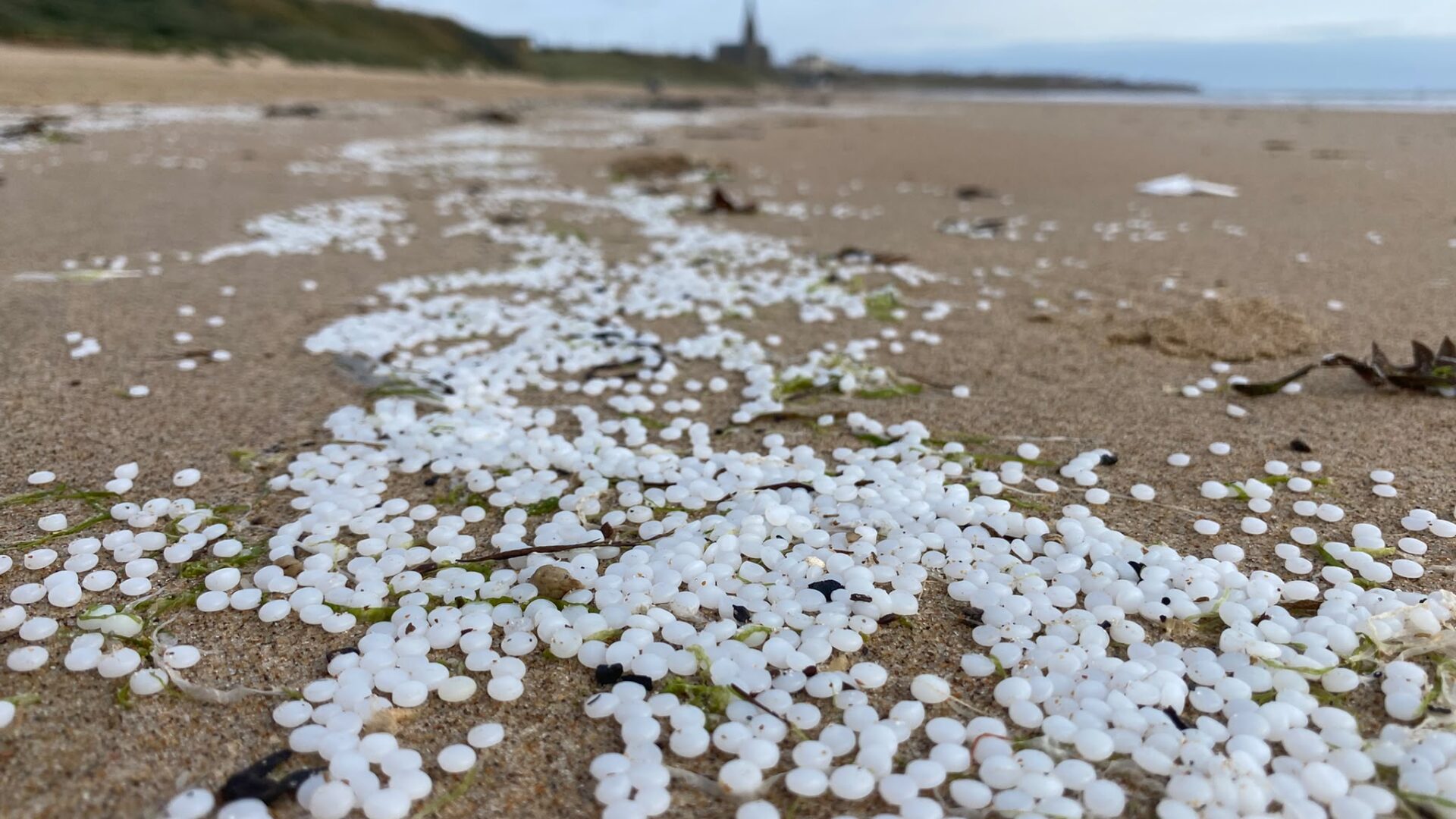
A major plastic pollution incident is unfolding along the Northeast coast, with nurdles washing up on beaches from the Tyne to Northumberland and Sunderland. While local communities have mounted an incredible volunteer response, the lack of a coordinated government-led emergency response has raised serious concerns about accountability, clean-up efforts and how similar disasters can be prevented in the future.
What happened?
On 19 July 2026, a collision at the Port of Tyne damaged shipping containers carrying nurdles, the small plastic pellets used to manufacture almost all plastic products. Around 25 tonnes of these pellets are believed to have been released into the River Tyne and the North Sea, where tides and currents quickly dispersed them along the coastline.
Once in the marine environment, nurdles are notoriously difficult to contain and recover. Their small size and buoyancy allow them to spread rapidly, washing up on beaches and posing a long-term threat to marine ecosystems.
For wildlife, the consequences can be severe. Seabirds and marine animals often mistake nurdles for food, leading to starvation, injury and exposure to harmful pollutants that can accumulate on the pellets’ surface. As concentrations of these contaminants increase at each trophic level, the risks to wildlife and human health intensify.
Every hour that passes significantly decreases the chances of the disaster being contained, as once dispersed by wind and tide, they are almost impossible to remove and will spread further along our coastline, embedding themselves deeper into beaches, estuaries and the wider marine environment.
Communities have led the response
In the absence of a formal emergency declaration, local people have stepped up. Hundreds of volunteers have organised and participated in clean-up efforts across the Northeast coast, demonstrating the strength and determination of coastal communities when their beaches are threatened. Much of this grassroots response has been coordinated by local campaigners and community leaders, including Surfers Against Sewage Regional Representative Sally. “”
However, despite the scale of the incident and the obvious environmental impact, the spill has not been formally declared a major incident and there has been no comprehensive government-led response.
What’s been holding back a large-scale clean-up?
In the immediate aftermath of the spill, guidance from the Environment Agency and several local authorities advised volunteers not to collect nurdles. This created uncertainty for communities keen to help and limited the ability of organisations to actively encourage volunteer clean-ups. Throughout this period, SAS representatives continued supporting local efforts while pushing regulators, councils, councillors, MPs and Mayors to establish a safe and coordinated volunteer response. More recently, some councils have amended their guidance and are now permitting volunteer collection of nurdles in certain locations. In response, SAS has updated its Million Mile Clean programme to support nurdle clean-ups where local authorities have explicitly authorised them.
Because guidance still varies between councils and individual beaches, and can change rapidly, we are only encouraging volunteer collection where permission has been clearly granted by the relevant local authority.
What are we calling for?
Alongside several eNGOs and community groups we have drafted an open letter to the Environment Minister and are working with environmental organisations, community groups and partners to strengthen a collective call for action.
We are calling for:
- A formal declaration of a major incident.
- The closure of port operations as a matter of urgency to enable an effective clean-up response.
- A coordinated, transparent and adequately resourced recovery effort.
- Clear accountability and meaningful consequences for those responsible for the pollution.
- Urgent legislative and regulatory reform to prevent future nurdle spills.
We are also continuing to seek direct engagement with the Environment Agency and other decision-makers to ensure communities’ concerns are heard and acted upon.
What now?
If you’re affected by the spill or want to support the response:
- Follow the latest guidance from your local authority before taking part in any nurdle clean-up.
- Join an approved Million Mile Clean event where volunteer collection is permitted.
- Record and report nurdle sightings to help build a clearer picture of the pollution’s spread.
- Share information about the incident and our campaign calls.
- Support our call for stronger regulation and accountability to prevent future plastic pellet pollution.
- Standing with Northeast communities
This is an exceptional environmental incident affecting one of the UK’s wildlife and coastal communities. The people of the Northeast have shown remarkable determination in protecting their beaches and marine environment, but they should not be left to face this challenge alone.
We will continue supporting local action, pushing for accountability and demanding the stronger protections needed to stop incidents like this from happening again.
UPDATE: Marine Minister Visits Port of Tyne
This week, Environment Minister Stephen Reed visited the Port of Tyne to see the impact of the nurdle spill firsthand and meet some of the organisations involved in the response. While we welcome the Minister’s engagement and recognition of the seriousness of the incident, communities and environmental groups continue to call for greater government support.
Local volunteers, charities and community organisations have been at the forefront of the clean-up effort since the spill occurred, dedicating countless hours to removing plastic pellets from beaches and protecting wildlife. Their commitment has been extraordinary, but it is not sustainable for local people to shoulder the burden of a pollution incident on this scale.
Alongside other environmental organisations and local campaigners, Surfers Against Sewage has urged the Government to commit additional resources to the clean-up operation. Many of the key measures we originally called for, including stronger emergency response arrangements and a more comprehensive clean-up effort, have yet to be realised.
We have written to the Minister following his visit, welcoming his interest in the issue and emphasising the need for further government action. We will continue to work with local communities and partner organisations to ensure this incident remains a priority until affected coastlines are properly cleaned up and lessons are learned to prevent future spills.
The message from the North East coast remains clear: local communities have stepped up, now government must do the same.