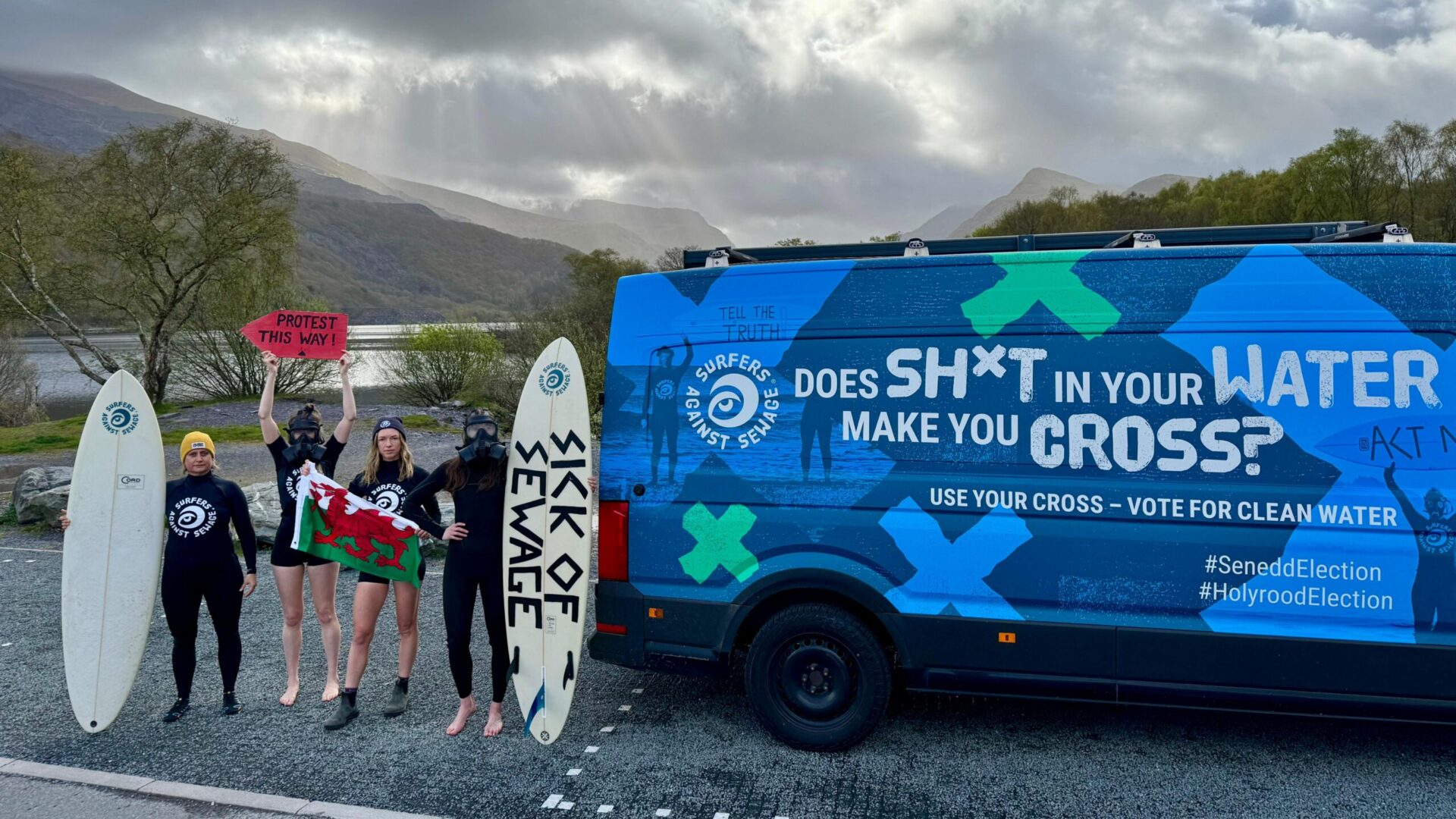
Wales’ Green Paper on Water: How to respond to the consultation
What is the consultation & why should you respond?
Surfers Against Sewage has submitted a full response to the Welsh Government’s once-in-a-generation Green Paper on water governance in Wales. If you’d like to respond, it’s a powerful way to send a message to the Welsh government that we want to see change, and remind them that your voices and experiences are important to this process.
You can respond via the online form here or by downloading & emailing the response form to [email protected]. Responses must be submitted by 7th April 2026.
When you open the consultation form, you’ll see a series of questions, & there are a lot. Below we have suggested key points for most of the questions. You don’t need to answer every question! Even responding to one or two makes a difference.
Use these however you like – copy, adapt, or put into your own words depending on how you feel about these points. Personal experiences are powerful – if you’ve been ill after swimming, seen pollution in your local river, or use the water regularly, then say so!
We previously put together a Senedd manifesto, which we worked with communities on, & this has formed the basis of many of these responses.
We want to call out bad practice, but also to highlight the possible solutions that exist already elsewhere. Much of what we’re asking for would be transformative for Wales, but often these principles are not untried & untested – there are great examples from across Europe & the world that we can look to & learn from.
If you have any thoughts or feedback that you would like us to consider for future work, then we’re all ears – please contact [email protected]
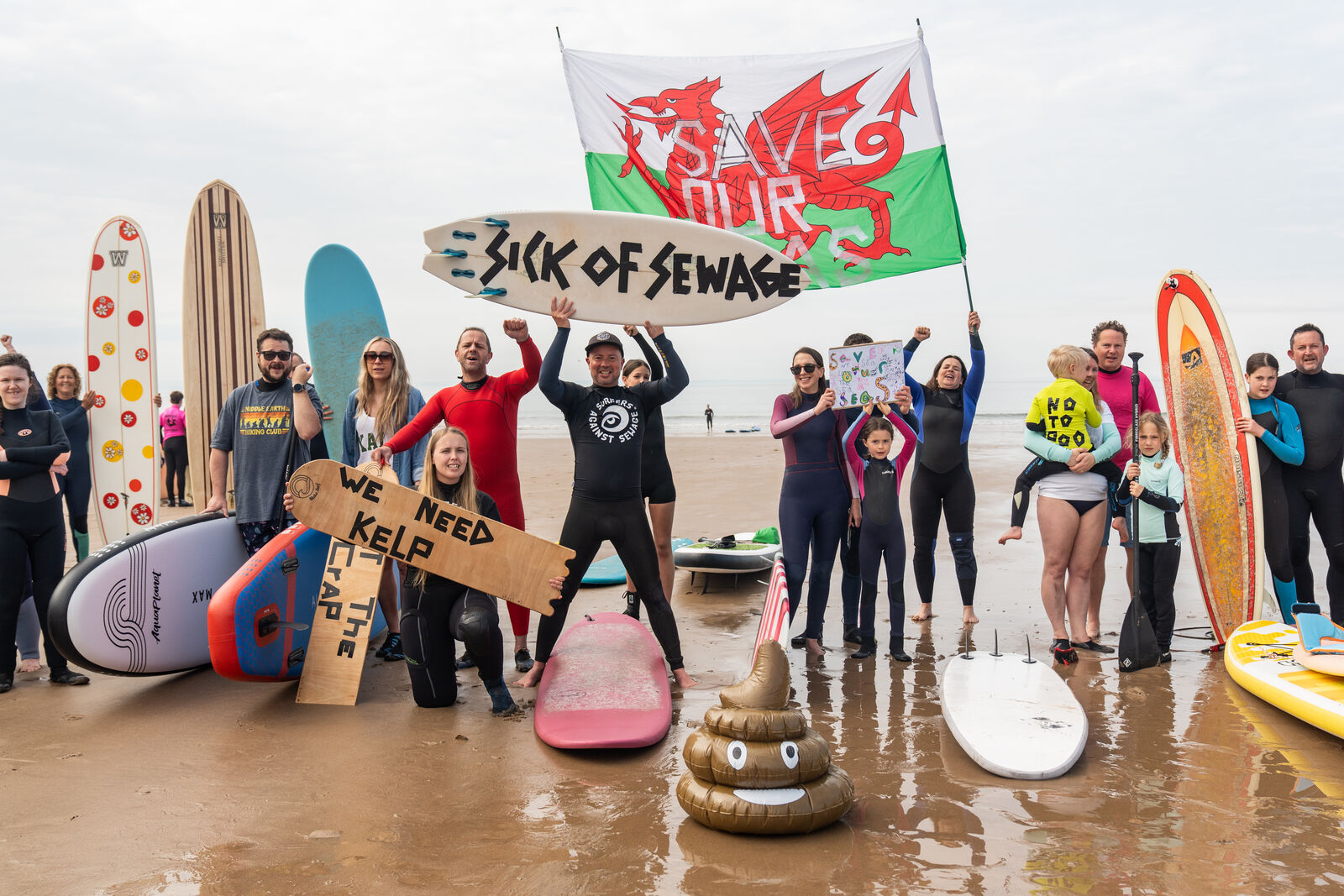
Suggested points to consider for each question:
Question 1: What factors or priority areas should Welsh Government consider when setting the strategic direction for the water system in Wales?
When you open this question, think about what matters most to you about Welsh water. Here are some points to consider:
- Welsh Water released sewage into rivers, lakes & seas for nearly a million hours in 2024 — that’s 286 spills every single day. Welsh customers pay the second highest water bills in the UK. This isn’t good enough & must change.
- The strategic direction must put public & environmental health at the centre — not as an aspiration, but as a legal duty for water companies & regulators alike.
- Natural Resources Wales (NRW), the body responsible for holding Welsh Water to account, has faced years of underfunding & job cuts. A strong strategy must include properly resourced, independent regulation.
- If you use the water — for surfing, swimming, kayaking, paddleboarding, or simply walking by a river — you have a stake in this. Welsh Government should hear from water users, not just industry.
- The not-for-profit model hasn’t protected Welsh waters or Welsh customers. Real reform means transforming the whole system, not just changing the label.
Question 2: How can the Price Review Forum & a potential Ministerial Statement of Water Industry Priorities best support transparency & effective delivery?
This question is about how Welsh Government sets priorities for water companies & holds them to it. Some points to consider:
- Customer bills must be invested in environmental & public health improvements, not swallowed by debt repayments or executive bonuses.
- It is a scandal that Welsh customers pay some of the highest water bills in the UK while their waterways are among the most polluted. Any Ministerial Statement must demand answers & set clear expectations.
- Any framework for delivery must be protected from industry lobbying. Long-term, cross-party commitments are needed so that progress isn’t undone with each change of government.
Question 3: What milestones or review mechanisms should be built into the strategic direction to ensure accountability & alignment with Welsh priorities?
This is about making sure promises are kept & progress is measurable. Some points to consider:
- A firm target of 2030 to end untreated sewage discharges at all designated bathing sites — not a vague 25-year horizon. Urgency matters.
- Milestones are meaningless without consequences. If a water company misses a target, there must be automatic, escalating action — not another round of improvement plans.
- Wales has the Wellbeing of Future Generations Act — a legal duty to act in the long-term interest of people & planet. Water governance milestones must reflect this, prioritising prevention over reaction.
- If you use the water for sport or recreation, think about what a difference it would make to see participation tracked as a measure of success — more young people safely in the water would be a genuine sign that things are improving.
Question 4: Do you support establishing a National System Planning Function for the water sector in Wales?
This question is about who plans & oversees the water system. Some points to consider:
- Yes, but only if it has real power. A planning body that can only advise, without the authority to challenge or overrule water companies, will not deliver change.
- Local people, communities & environmental groups must have genuine decision-making power, not just a seat at the table as a token gesture.
- Any planning body must sit above water companies in the decision-making hierarchy, directing them to deliver on public & environmental goals rather than the other way around.
- Local knowledge matters. People who live & recreate alongside rivers & coastlines see things that regulators don’t. Citizen science & community data should be formally built into planning processes.
- There are brilliant examples from elsewhere. Paris & Finland both show what genuinely democratic, community-led water governance can look like. Wales can lead the way too.
Question 5: How should water industry investment planning cycles balance affordability, resilience, & environmental priorities?
This question is about how water companies plan & fund long-term improvements. Some points to consider:
- Short-term thinking has got us into this mess. Investment planning must look decades ahead. Nature-based solutions, river restoration & reservoir building take time to deliver their full benefits, & that must be recognised.
- But long-term planning can’t be an excuse for delay. Where action is needed now, on sewage spills, on public health. 5 & 10 year cycles can allow ability to respond.
- The cost of fixing our water system doesn’t disappear if we ignore it. It just gets passed to future generations.
- Public & environmental health must come first in every investment decision, not as one factor among many, but as the overriding priority.
Question 6: What do you see as the added value a system planning approach could bring?
This is about how a joined-up approach to planning water management could work in practice. Some points to consider:
- A system planning approach could finally join up agriculture, housing & water management in a single framework, forcing genuine cross-sector accountability for the health of our catchments.
- Local people must be at the heart of this. Communities who live alongside rivers & coastlines have knowledge & observations that no desk-based model can replicate. Citizen science should be formally built in, & if you have ever reported a pollution incident, contributed to a water quality monitoring project, or noticed changes in your local river over time this is a good place to mention it.
- Any planning body must have real power over water companies, not just the ability to make recommendations that can be ignored.
Question 7: How should cross-border relationships with England be managed?
Rivers don’t stop at borders — this question is about making sure Welsh & English regulators work together. Some points to consider:
- The Wye, Severn & Dee all flow from Wales into England. Without formal cross-border governance, there will be gaps in accountability where pollution can fall through the cracks.
- Joined-up, catchment-based planning across Wales & England is not optional but essential for rivers that both countries share. Communities who live & recreate along cross-border rivers must be included in any governance structure.
Question 8: Does the current water legislative framework for Wales require amendment?
Some points to consider:
- In summary, they do need significant change. Current legislation has failed to protect Welsh waters or the people who use them. Reform is urgently needed.
- The Urban Waste Water Treatment Regulations 1994 are over 30 years old & must be updated to address emerging pollutants, including PFAS, microplastics, pharmaceuticals & antibiotic-resistant bacteria.
- Bathing water regulations must be reformed to protect all water users — not just swimmers, & not just in summer. If you surf, kayak, paddleboard or wild swim, you deserve the same protection as anyone else.
- A recent change means polluted sites can now be excluded from designation, & therefore from monitoring & improvement, even though people will still use the water there. This must be reversed.
Question 9: Should public health outcomes & nature-based solutions be incorporated into future water legislation?
Some points to consider:
- In 2024, Surfers Against Sewage received 260 reports of people becoming ill after using the water in Welsh Water’s catchment area. Public health must be a legal duty, not an aspiration.
- Nature-based solutions e(.g. wetland restoration, floodplain reconnection, riparian buffer zones) are cost-effective, deliver multiple benefits, & must be the first choice over hard engineering.
- Clean water is a public health issue — access to safe water for recreation reduces loneliness, supports wellbeing, saves NHS appointments, & as extreme weather increases, nature-based solutions reduce the risk of sewage flooding.
- Emerging pollutants like PFAS & antibiotic-resistant bacteria are already present in Welsh waterways. Legislation must urgently including monitoring & action.
Question 10: What innovations or enforcement approaches could strengthen compliance?
This question is about how to ensure water companies follow the rules. Points to consider:
- Operator self-monitoring, where water companies report their own pollution, is fundamentally flawed. It’s like asking someone to mark their own homework. It must be replaced with independent, real-time monitoring.
- Citizen scientists across Wales are already collecting water quality data. This evidence should be formally recognised & used by regulators. It’s robust, it’s local, & it reduces costs. Their data & knowledge should feed directly into regulatory decision-making. Examples include: Protecting Wild Waters (our programme), A Peace for Nature & Save the River Usk
- No monitoring system will work without a properly funded, empowered regulator to act on the results. NRW needs the resources & powers to do its job.
Question 11: Do you agree with the proposal to establish a new, standalone economic regulator for water in Wales?
This is about whether Wales should have its own regulator for water, separate from the England-focused Ofwat. Some points to consider:
- Yes, but only if it has genuine independence, tough enforcement powers & proper funding. A regulator in name only would be worse than no change.
- Around 41% of Welsh Water’s revenue goes to servicing debt . This is more than privatised English water companies & far more than publicly owned Scottish Water. A Welsh regulator must have the power to address this.
- Welsh water companies must be given a statutory public benefit duty — their first obligation should be to the people of Wales, not to creditors.
Question 12: What governance principles should underpin the design of a Welsh economic regulator?
This is about what values & rules should guide regulator operation. Points to consider:
- Public & environmental health must be the overriding priority — above financial considerations, above industry convenience, above everything else.
- Senior leaders at water companies must face personal accountability for systemic pollution failures, not just corporate fines.
- Existing laws must be enforced first. Water companies are already legally required to treat sewage effectively & only use storm overflows in exceptional circumstances. A new regulator’s first act must be to enforce this law.
Question 13: If enabling powers were not conferred by UK Government, what changes would be required?
This is about what happens if Wales doesn’t get the powers it needs from Westminster. Some points to consider:
- If powers aren’t devolved, UK regulators must still be legally bound by Welsh-specific public health targets & the 2030 sewage discharge goals.
- Welsh Government must have formal mechanisms to influence price reviews & investment priorities for companies operating in Wales.
- Wales cannot afford to wait. Many improvements — better monitoring, stronger enforcement of existing law, greater transparency — can happen now, without new powers.
Question 14: Which changes to performance commitments & outcome delivery incentives should be prioritised?
This is about how water companies are rewarded or penalised based on their performance. Some points to consider:
- Heavy, automatic financial penalties for sewage discharge failures — not voluntary improvement plans, not years of negotiation. If you spill, you pay, immediately.
- Customer bills must deliver value — debt must be regulated, & customers must see their money going into environmental & public health improvements.
- Performance information must be publicly available, in plain language, linked to real outcomes, for all water users to understand.
Question 15: How can digital enforcement & monitoring be implemented affordably?
This question is about using technology & data to improve compliance without passing huge costs to customers. Some points to consider:
- Replace manual sampling with automated sensors & real-time public reporting. The technology exists. The cost savings over time are significant. The public health benefits are immediate.
- Groups like our Protecting Wild Waters, A Peace for Nature & Save the River Usk are assets. Their knowledge & data should be recognised & used, not ignored.
- None of this works without a properly resourced NRW. Digital tools are only as good as the regulator using them.
Question 16: How should civil sanctions & enforcement powers be applied proportionately?
This is about making sure penalties for pollution are meaningful. Some points to consider:
- Fines must always cost more than the infrastructure investment that would have prevented the violation. If it’s cheaper to pollute & pay, that’s not a deterrent.
- Prosecution must be swift. NRW has historically had to wait years to prosecute pollution incidents — by which time company leadership has often changed. The polluter must pay, & pay promptly.
- Sanctions must escalate for persistent failure, not reset with each new improvement plan. Proportionality is not the same as tolerance.
- All enforcement outcomes must be published clearly so the public can see justice being done — or hold regulators to account when it isn’t.
Question 21: What measures would strengthen governance standards & senior accountability in Welsh water companies?
This is about making sure water company leaders are genuinely responsible for what happens on their watch. Some points to consider:
- Board members must be legally responsible for asset health. Senior leaders must face personal accountability for systemic pollution failures.
- Customers & environmental groups must have genuine seats on water company boards — with equal voting power, not token representation.
- Full financial transparency on executive pay, debt & customer bill usage must be publicly visible.
Question 22: How can financial resilience requirements support sustainability, & what principles should guide decisions on alternative ownership models?
This is about how water companies are financed & whether different ownership models could work better. Some points to consider:
- Green bonds, sustainability-linked bonds & outcome-based financing offer real alternatives to the high-cost private debt that currently burdens Welsh Water. Welsh Government should actively explore these.
- There are many models worth exploring — from cooperatives to municipal ownership to community interest companies.
- Welsh Government should undertake a thorough, evidence-based review of alternative ownership models. Whatever model is chosen, public & environmental health must come first.
Question 23: What outcome-based resilience standards would be most appropriate for Wales?
This is about making sure infrastructure withstands future pressures. Points to consider:
- “Disproportionate cost” cannot be judged on present costs. The cost of inaction (pollution, public health crises, environmental degradation) is higher in the long run.
- Citizen science & community data should be integrated into asset health mapping. It’s cost-effective & improves coverage where NRW monitoring is limited.
- Early, visible actions including better public access to data, & clear commitments on high-risk assets build trust & save money in the long run.
Question 24: What steps should improve supply chain and workforce capacity?
This is about making sure Wales has the skilled workers & supply chains to actually deliver water infrastructure improvements. Some points to consider:
- Long-term investment pipelines give suppliers & contractors the confidence to invest in skills & equipment. Short-term, uncertain contracts produce short-term, uncertain results.
- Staff retention matters as much as recruitment. Experienced people leaving the sector takes irreplaceable knowledge with them.
- Procurement must reward quality & long-term delivery — not just lowest cost. Race-to-the-bottom tendering produces race-to-the-bottom outcomes.
Question 25: What should be the key priorities in the transition plan for water sector reform?
This is about making sure the process of reform doesn’t become an excuse for delay or reduced accountability. Some points to consider:
- A transition period is not an excuse for inaction. Interim arrangements must maintain, & where possible strengthen, environmental protection & enforcement.
- A clear timetable with published milestones & named responsibilities is essential.
- Early, visible delivery such as improved public access to data, standardised reporting, commitments on high-risk sites demonstrate action, not just words.
Question 26: How can governance mechanisms ensure effective stakeholder engagement during transition?
This is about making sure the right voices are heard — and have real power — during the reform process. Some points to consider:
- An independent implementation group must be established — with genuine representation from water users, community groups & environmental organisations, not just industry stakeholders.
- This oversight function must not end when the transition period ends. Ongoing, independent scrutiny is needed long after new structures are in place.
- Local people must have real power in how water is planned & managed in their area, not just in consultation opportunities that can be ignored.
Question 27: What are the likely effects of these proposals on the Welsh language?
Some points to consider:
- Wales’s rivers, coastlines & waterways are deeply embedded in Welsh culture & language. Cleaner, healthier waterways create real opportunities for Welsh-speaking communities to reconnect with their environment in their own language.
- All public engagement, transparency tools & monitoring dashboards should be available in Welsh as standard.
Question 28: Could proposals be changed to have more positive effects on the Welsh language?
Some points to consider:
- Explicitly recognise the cultural & linguistic significance of Wales’s waterways in the strategic direction for water governance.
- Support Welsh-medium citizen science & environmental education programmes, connecting language learning with environmental stewardship.
Question 29: Any other issues not addressed?
A few final points:
- Antibiotic-resistant bacteria (AMR) in Welsh waterways is a growing public health emergency that deserves urgent, cross-departmental action.
- Clean water delivers long-term NHS savings. Safe access to rivers & seas for recreation reduces loneliness, supports mental health & increases physical activity. These benefits should be central to the case for investment.
- Welsh Government is waiting on some powers from Westminster to deliver the full reform package. Pushing urgently for those powers is itself a priority action. But much can be done now — & should be.