SAS investigation exposes illegal sewage dumping at England’s ‘cleanest’ beaches
Illegal behaviour, hidden datasets, no accountability and our health at risk A broken system.
A Surfers Against Sewage investigation has uncovered thousands of hours of illegal sewage discharges into England’s bathing waters on dry days – including at beaches officially rated “excellent” for water quality.
Surfers Against Sewage and Top of the Poops analysed new data obtained through a Freedom of Information request to the Environment Agency. 2025 is the first year water companies have been required to submit specific dry spill data to the regulator, giving the clearest picture yet of how often sewage is being discharged illegally in dry weather.
Crucially, these dry spills will not be used to influence water companies’ Environmental Performance Assessment ratings in 2025 – but they are expected to be included in future years. That raises serious questions about whether current ratings accurately reflect the real environmental impact of sewage discharges.
These are the beaches swimmers, surfers and families trust to be clean and safe.
But the data tells a different story.
What are illegal “dry spills”?
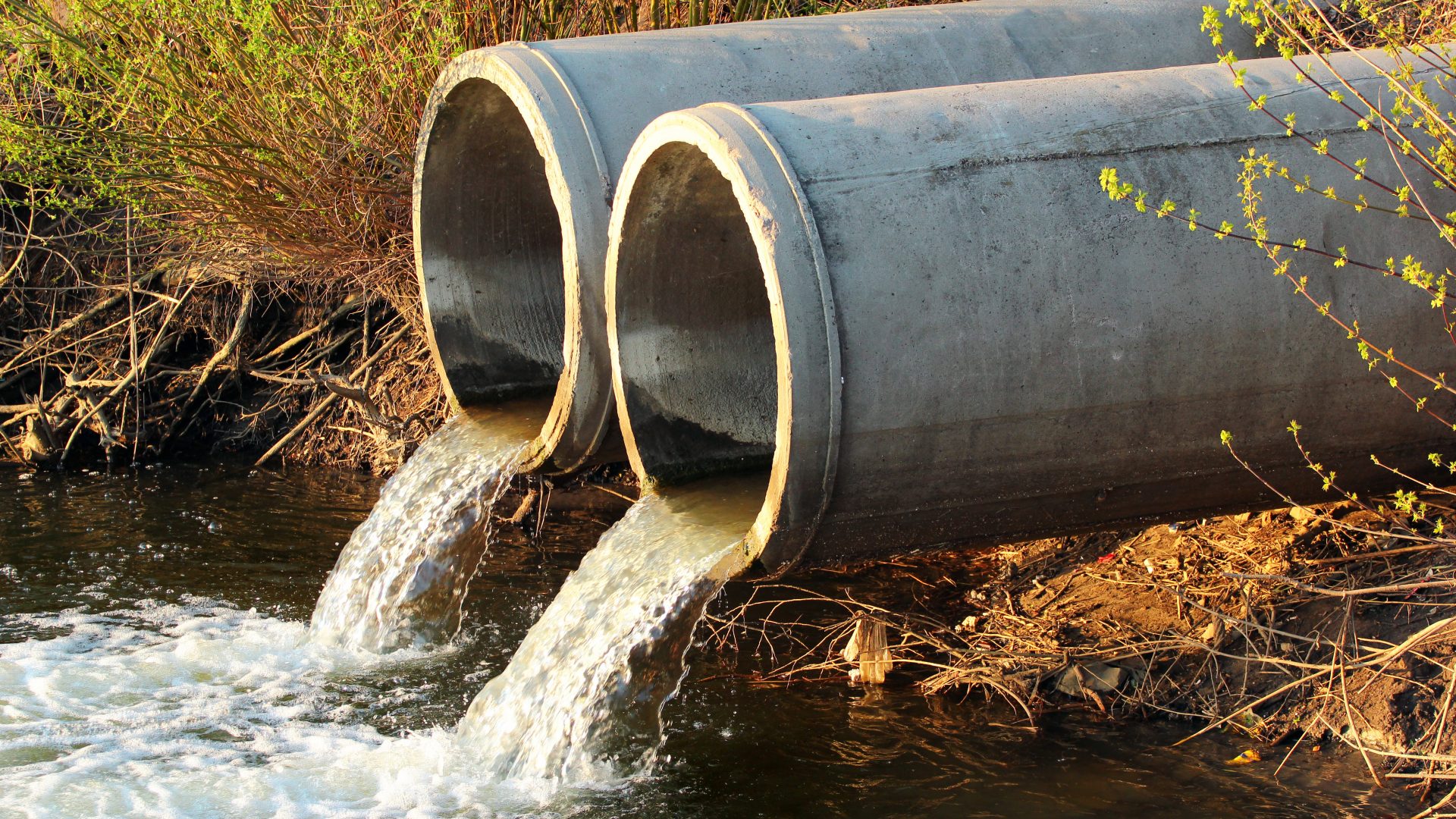
Sewage overflows, also known as combined sewer overflows (CSOs), are designed to discharge waste only during heavy rainfall, when sewer systems risk becoming overwhelmed.
However, our investigation shows that sewage is being discharged even when it hasn’t rained.
A dry spill occurs when a sewer overflow releases sewage when rainfall is below 0.25mm on the day of the spill and the following 24 hours.
Because there is no rainwater to dilute the waste, pollution released during dry spills can be more concentrated and potentially more harmful for swimmers, surfers and other water users.
In rivers and coastal waters where water levels are lower, this means dangerous bacteria, pathogens and chemicals can be far more concentrated.
Unlike pollution after heavy rainfall (a risk many swimmers are aware of) dry spills are far less predictable. Water users may assume conditions are safe on a dry day, when in reality sewage is still being discharged nearby.
Dry spills epitomise the failure of the water industry to manage sewage properly and show a clear neglect of environmental regulations. The frequency and volume of these discharges indicate networks are being mismanaged far too often, putting the public at risk.
‘Excellent’ beaches among the worst affected by sewage pollution
Our analysis shows some of England’s most popular bathing waters experienced hundreds of hours of illegal sewage discharges.
Among the worst affected locations were:
-
Portreath, Cornwall – 661 hours (rated Excellent)
- Mothecombe, Devon – 456 hours (rated Good)
- Allonby, Cumbria – 428 hours (rated Good)
- Pentewan, Cornwall – 391 hours (rated Excellent)
- Seaton, Cornwall – 349 hours (rated Excellent)
- Windermere, Rayrigg Meadow, Cumbria – 325 hours (rated Excellent)
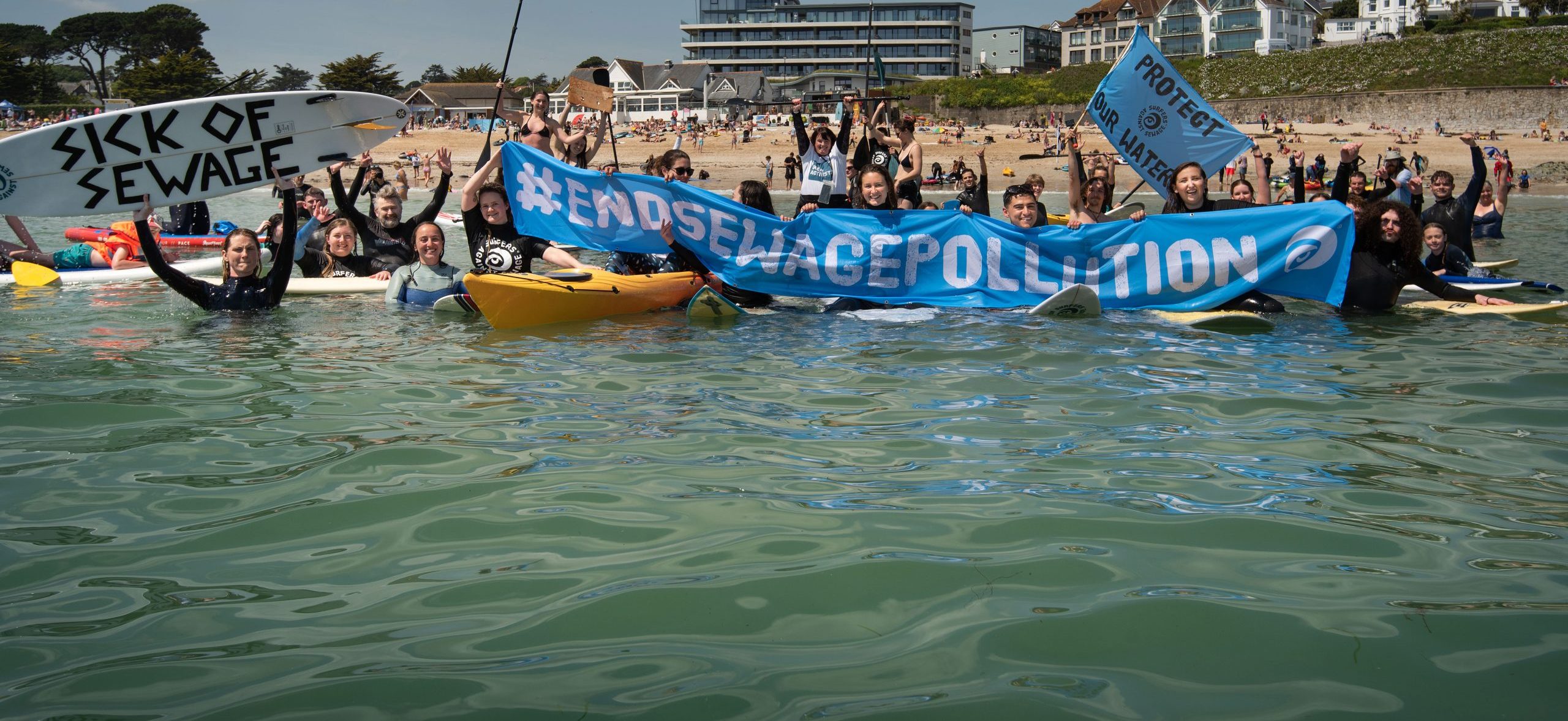
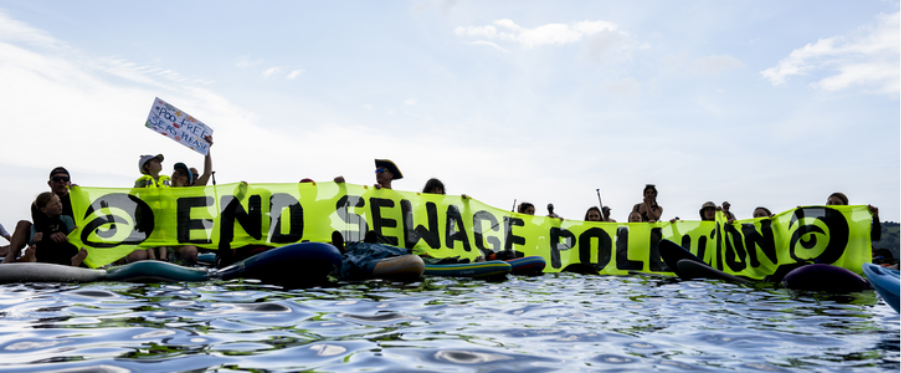
One of the bathing waters impacted by illegal dry spills was Gyllyngvase Beach in Falmouth which is the location for the SAS flagship Paddle-Out Protest each year.
The constituency with the highest number of dry spills was Westmorland and Lonsdale, with 9,255 hours of illegal discharges recorded in 2025.
Meanwhile, the River Carnon experienced almost 1,000 hours of dry-day sewage spills.
These figures raise serious questions about how accurately official bathing water ratings reflect real pollution risks.
Source: Data is from a response to the EA for Dry Spills data in 2025
Swimmers reporting sickness after sewage pollution
Surfers Against Sewage tracks the live status of more than 18,000 sewage overflows across the UK through the Safer Seas and Rivers Service, which provides real-time pollution alerts and allows water users to report illness after swimming.
By combining this sickness reporting data with the dry spill dataset, SAS identified 20 cases of illness reported in 2025 that were linked to confirmed illegal dry-day sewage discharges.
These reports came from 14 different locations.
They included:
- Two sickness reports involving children, including one under the age of five
- A swimmer forced to take eight days off work due to illness
- Multiple sickness reports linked to beaches including Sidmouth, Gyllyngvase and Westward Ho!
Alarmingly, 17 of the 20 cases occurred at bathing waters rated “excellent”.
Across England in 2025, 1,236 people reported becoming ill after entering the water, with 74% of cases occurring at bathing waters rated “good” or “excellent”.
This is why Surfers Against Sewage urges water users to check pollution alerts before entering the water. Through the Safer Seas and Rivers Service app, swimmers can see live sewage overflow alerts and identify discharges near their favourite swim spots.
Understanding where overflows are located and checking conditions before swimming can help reduce the risk of exposure to sewage pollution – particularly on dry days when spills may be less expected.
Which water companies are responsible?
The data shows major differences in the number of dry spills between water companies.
Our analysis found South West Water was responsible for the highest number of dry spills, totalling 46,586 hours of illegal discharges in 2025.
South West Water currently holds a two-star Environmental Performance Assessment rating from the Environment Agency. But because dry spill data is not yet included in the regulator’s scoring system, the scale of these illegal discharges raises serious questions about whether that rating accurately reflects the company’s environmental performance.
Based on the evidence in this dataset, Surfers Against Sewage believes the number of dry spills suggests the rating should be significantly lower.
The majority of sickness reports linked to dry spills also occurred within the South West Water region.
The data also reveals a worrying trend: several dry spills occurred at un-permitted overflows – sites that have no legal right to discharge at all. Across England in 2025, there were 2,263 hours of discharges from un-permitted overflows, including one located near a primary school.
All of these un-permitted dry spills were recorded from three companies: South West Water, Wessex Water, and Severn Trent Water. These incidents make a mockery of the permit system and raise serious questions about regulatory enforcement and oversight.
These findings add to growing concerns about systemic failures in England’s water industry and the continued pollution of rivers and seas.
| Water Company | Dry Day Spills | Sites with Dry Day Spills | Dry Spill Duration (Hours) |
|---|---|---|---|
| Anglian Water | 1,583 | 380 | 11,832.43 |
| Northumbrian Water | 491 | 151 | 3,277.37 |
| Severn Trent Water | 1,610 | 297 | 18,401.24 |
| South West Water | 4,345 | 448 | 46,586.34 |
| Southern Water | 857 | 136 | 10,061.89 |
| Thames Water | 1,983 | 205 | 25,807.46 |
| United Utilities | 1,216 | 311 | 10,613.93 |
| Wessex Water | 1,474 | 209 | 22,225.26 |
| Yorkshire Water | 1,204 | 328 | 8,877.60 |
| Total | 14,763 | 2,465 | 157,683.52 |
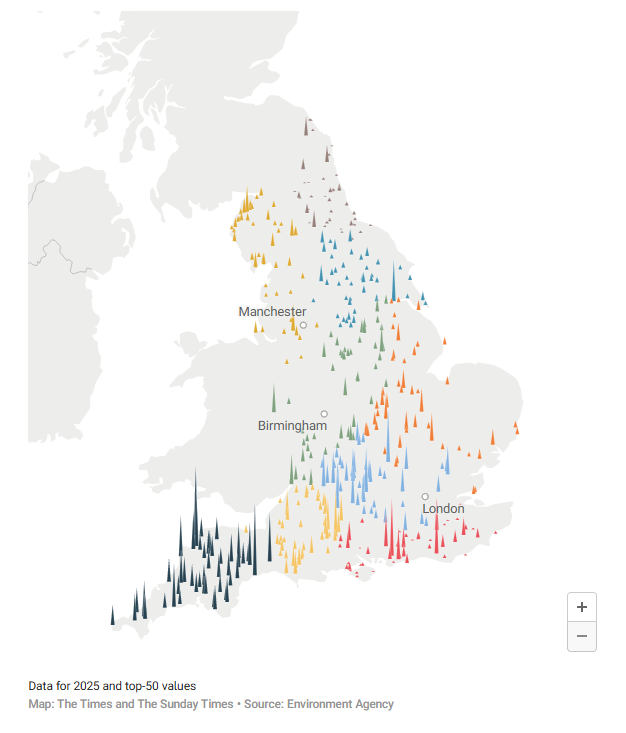
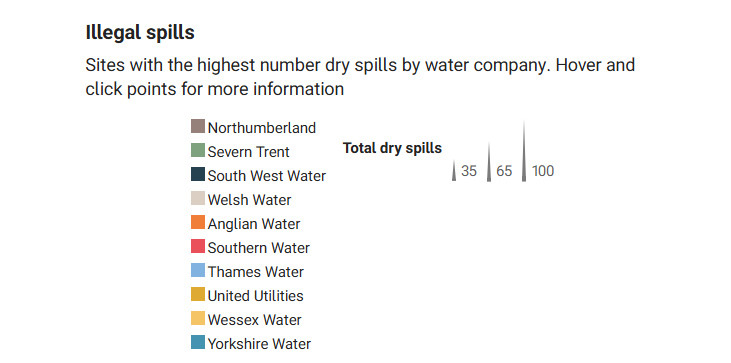
Source: The Sunday Times
“Corporate criminality”: SAS response
Surfers Against Sewage CEO Giles Bristow said:
“Water companies’ brazen disregard for the law is creating a public health emergency right under our noses.
This isn’t the delivery of a vital public utility – it’s corporate criminality that is poisoning surfers, swimmers and children who just want to dip in the sea.
When will the Government wake up and realise these profit-crazed companies are not fit for purpose?”
Why sewage pollution is back in the spotlight
Public anger around sewage pollution has intensified in recent years – highlighted in the Channel 4 drama Dirty Business, which exposed the failures and profiteering within the water industry.
But our investigation shows that illegal sewage discharges are still happening – even at England’s cleanest-rated beaches.
For swimmers, surfers and paddleboarders, that means the risk of sewage pollution may be far higher than official ratings suggest.
The solution: put public health before profit
We are calling on the Government to reform the water industry around two core principles:
- Public health must always come first
- Profit from sewage pollution must end
This would require taking back control of water companies and restructuring the industry so it operates in the interests of people and the environment — not shareholders.
All options must remain on the table, including public ownership of water companies.
How swimmers can protect themselves from sewage pollution
Before entering the water, we recommend checking live sewage alerts through the Safer Seas and Rivers Service app.
- Check for recent sewage discharges near your swim spot
• Avoid swimming near outfalls after pollution alerts
• Report sickness after swimming to help track pollution impacts
Community reporting plays a vital role in holding water companies and regulators accountable.
Take action
These un-permitted spills show that even legal frameworks aren’t enough to stop water companies polluting our rivers and beaches. It is why Surfers Against Sewage is calling for stronger enforcement, public ownership, and real accountability in the water industry.
In response to the sewage scandal, we have launched a national petition calling on the Government to take back control of water companies and end sewage pollution.
Following the broadcast of Dirty Business, hundreds of thousands of people have already signed the petition.
Now we need even more voices.
Add your name and demand an end to sewage pollution in UK rivers and seas.
Together we can hold polluters accountable and fight for clean seas, rivers and lakes for everyone.
And until that happens, you can protect yourself from sewage pollution by checking live alerts and pollution updates on our Safer Seas and Rivers app (it’s free!)