
What is public ownership?
The conversation on water has shifted. The question of who should own and run our water industry is finally being asked loudly, in parliament and in the pub. But what that might could look like is still murky to many.
The conversation on water company ownership has shifted. The question of who should own and run our water is finally being asked loudly, in parliament and in the pub.
Andy Burnham is the new Prime Minister. Among the policies he’s suggested is bringing water companies back into public ownership. With the structure of water companies at the centre of the debate – we want to make something clear:
The water system is broken. But the solution isn’t black or white. There’s a whole spectrum of options in between. And that matters.
Many people hear public ownership and assume it means renationalisation – this is not the case. The options for public ownership go much wider than that. Take Manchester Buses, which Burham restructured as Manchester Mayor away from private companies and into public ownership.
What we know for certain
At SAS, we’ve said it plainly before and we’ll say it again: the current privatised water system is fundamentally broken and must end. Private companies cannot and will not prioritise public health or the environment over profit. Just look at their track record. All thirty-five years of it.
We believe water companies must operate primarily for public and environmental benefit. But what does “public benefit” actually look like in practice? This is where the conversation gets more interesting — and more hopeful.
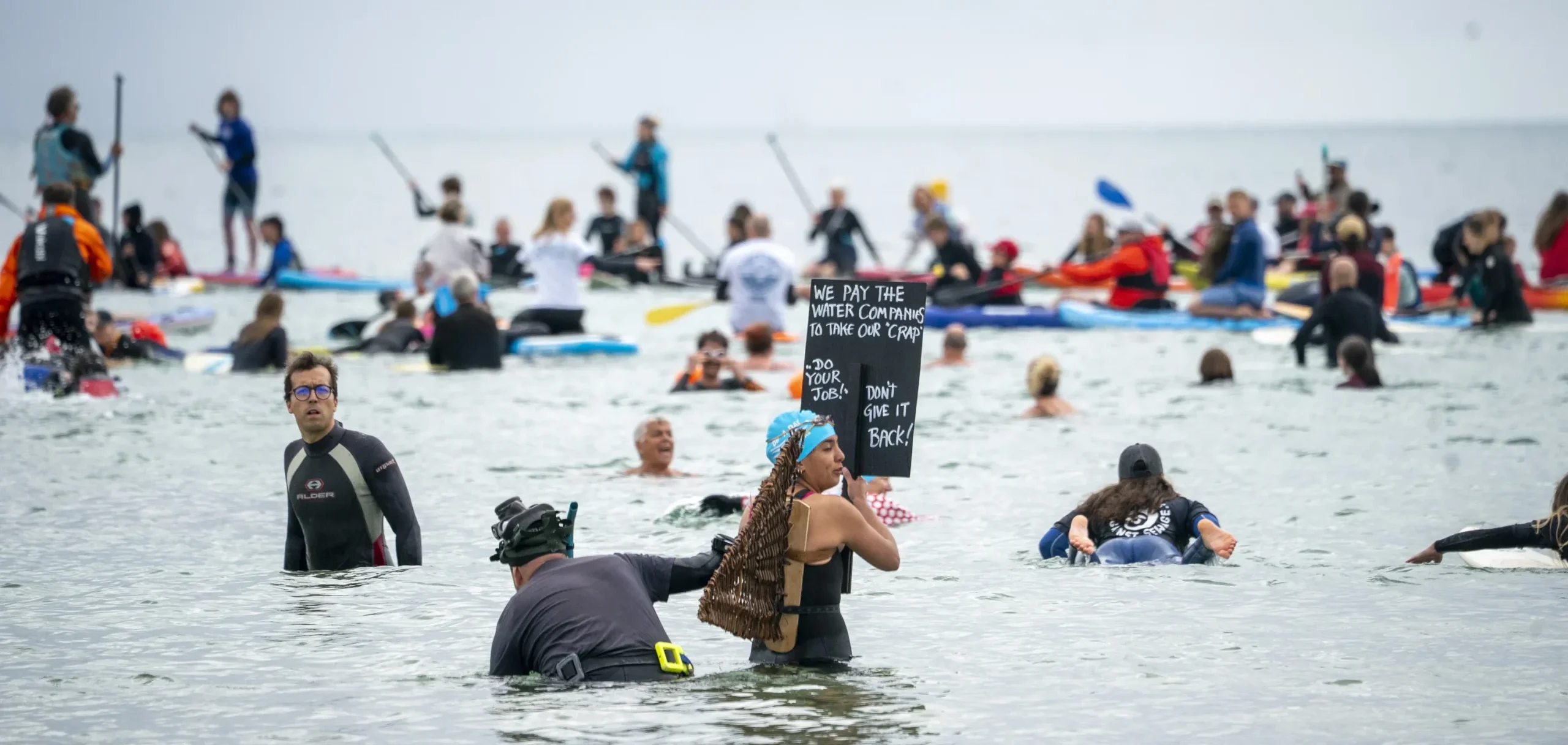
PA Media
It’s not just nationalise or privatise
When people debate water ownership, the debate too often collapses into two camps: keep things as they are (privatised), or have the government take everything back (nationalise). And the key push back we hear from those in power about the renationsalisation of companies is that it would be harder to get the investment to improve companies’ infrastructure. But that shouldn’t just mean we accept the status quo. There are many other options, namely:
The mutual or cooperative model (Welsh Water / Glas Cymru)
This is perhaps the most important model that doesn’t get enough airtime. Welsh Water — Dŵr Cymru — is a not-for-profit company limited by guarantee. It has no shareholders. Any surplus is reinvested back into the network rather than paid out as dividends. It’s been running this way since 2001, and Wales consistently performs better on key measures than many of its English counterparts. It was born out of exactly the kind of crisis England is in now — and it worked. This model can be financed through bonds on the capital markets, meaning it doesn’t necessarily require a huge hit to the public purse.
The public benefit company model
This is closer to what Andy Burnham and others have been pointing towards — a structure where the legal purpose of the company is rewritten so that public and environmental benefit comes first, not shareholder profit. Think of it like a social enterprise, but at utility scale. The company can still involve private investment and operate commercially, but its legal obligations and governance are fundamentally reoriented around people and planet, not dividends.
Customer and worker ownership
Somewhere between mutual and cooperative, this model puts the people who rely on — and deliver — the water at the heart of governance. Customers and employees have real stakes and real votes. Decisions are made with accountability to the people in the catchment, not to investors on the other side of the world.
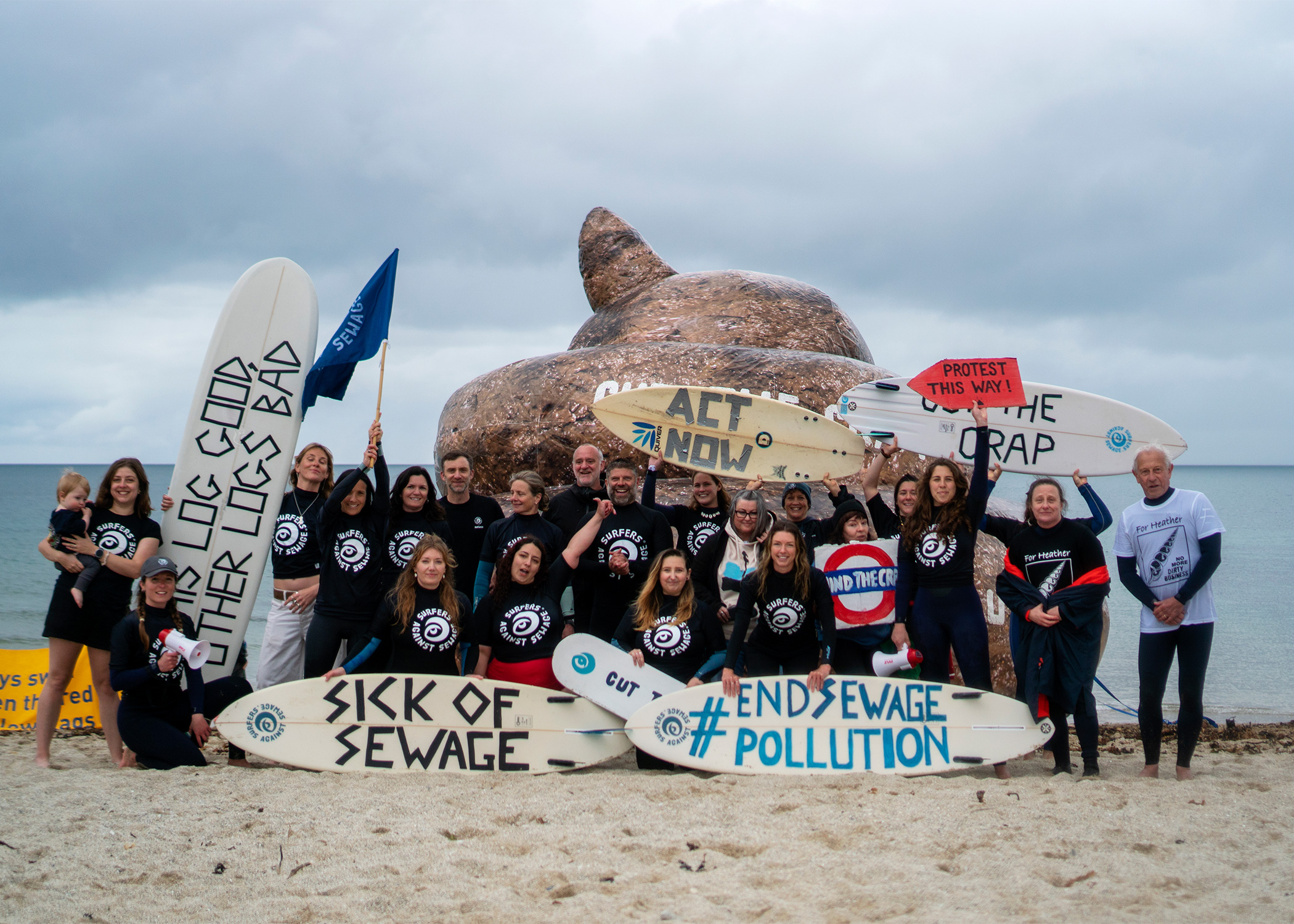
Falmouth Paddle-Out Protest – Mat Arney
Why this matters for our seas and rivers
Every one of these models has something in common that the current system doesn’t: democratic accountability to people and environment, not profit.
Under the current model, water company executives have a legal duty to their shareholders. Environmental performance is a cost to be managed, not a purpose to be fulfilled. That’s why sewage spills aren’t an accident — they’re a symptom of a system designed to extract value, not protect it.
Under any genuinely public benefit model, this maths changes. Investment in infrastructure, in clean water and the environment stops being a threat to the bottom line and start being the whole point.
That’s what we need for our beaches, our rivers, and our seas.
A moment of possibility
We’re at a genuinely unusual political moment. The Government has promised the most far-reaching reform of the water sector in a generation. And across the political conversation — including from voices who are now shaping Labour’s next chapter — the question of ownership is being asked more seriously than it has been in decades.
The case for public ownership of England’s water is overwhelming, and the models to achieve it already exist.
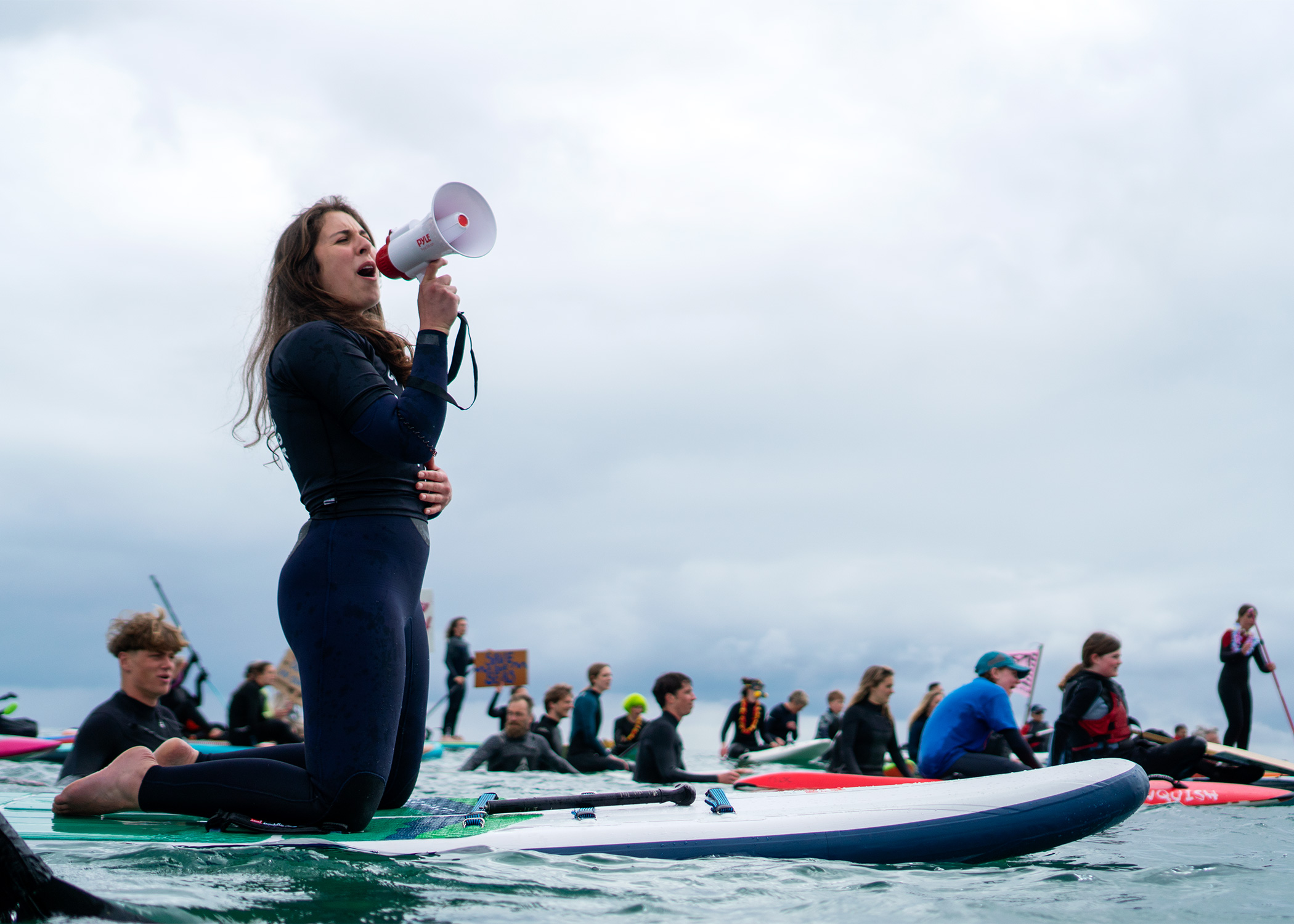
Falmouth Paddle-Out Protest – Mat Arney
What we’re calling for
We want to see England’s water companies restructured so that public health and environmental performance are their primary legal purpose, not an afterthought. We want an ownership model that locks out excessive dividend extraction, reinvests surplus into infrastructure and nature, and puts the people who live in and love these catchments at their centre.
Whether that’s achieved through nationalisation, mutualisation, public benefit company structures, or a regional mixed model — we’re open. What we’re not open to is carrying on as we are.
The water in our rivers, on our beaches, and in the sea where we surf and swim belongs to all of us. It’s time the companies managing it were accountable to all of us too.
Tell the Government it’s time for a change in the water industry. Sign and share the petition.
Burnham’s buses: A case study
For nearly four decades, Greater Manchester’s buses were privately run under a deregulated system. Fewer riders, rising fares, and poorly coordinated services were all a consequence. In 2021, Greater Manchester Mayor Andy Burnham used powers granted by the Bus Services Act 2017 to bring the bus network back under public control through a franchising model — the first city region outside London to do so.
Rather than privatised operators running whatever routes they chose for profit, Transport for Greater Manchester now sets the routes, fares, and standards, with private companies only able to operate buses under contract to the public body. The network, rebranded the Bee Network, was rolled out in phases between 2023 and 2025.
The results have been striking: bus use grew by 14%, mileage increased at nearly three times the national average, costs per kilometre fell by a third, and passengers can now use a simple tap-in/tap-out system with a daily fare cap — much like London’s. The scheme is widely regarded as a model for how returning public services to public control can deliver better outcomes for ordinary people.