Blog Taith Hystings y Senedd
Golwg y tu ôl i’r llenni ar ein hymgais i sicrhau bod yr ymgeiswyr yn cymryd carthion o ddifrif
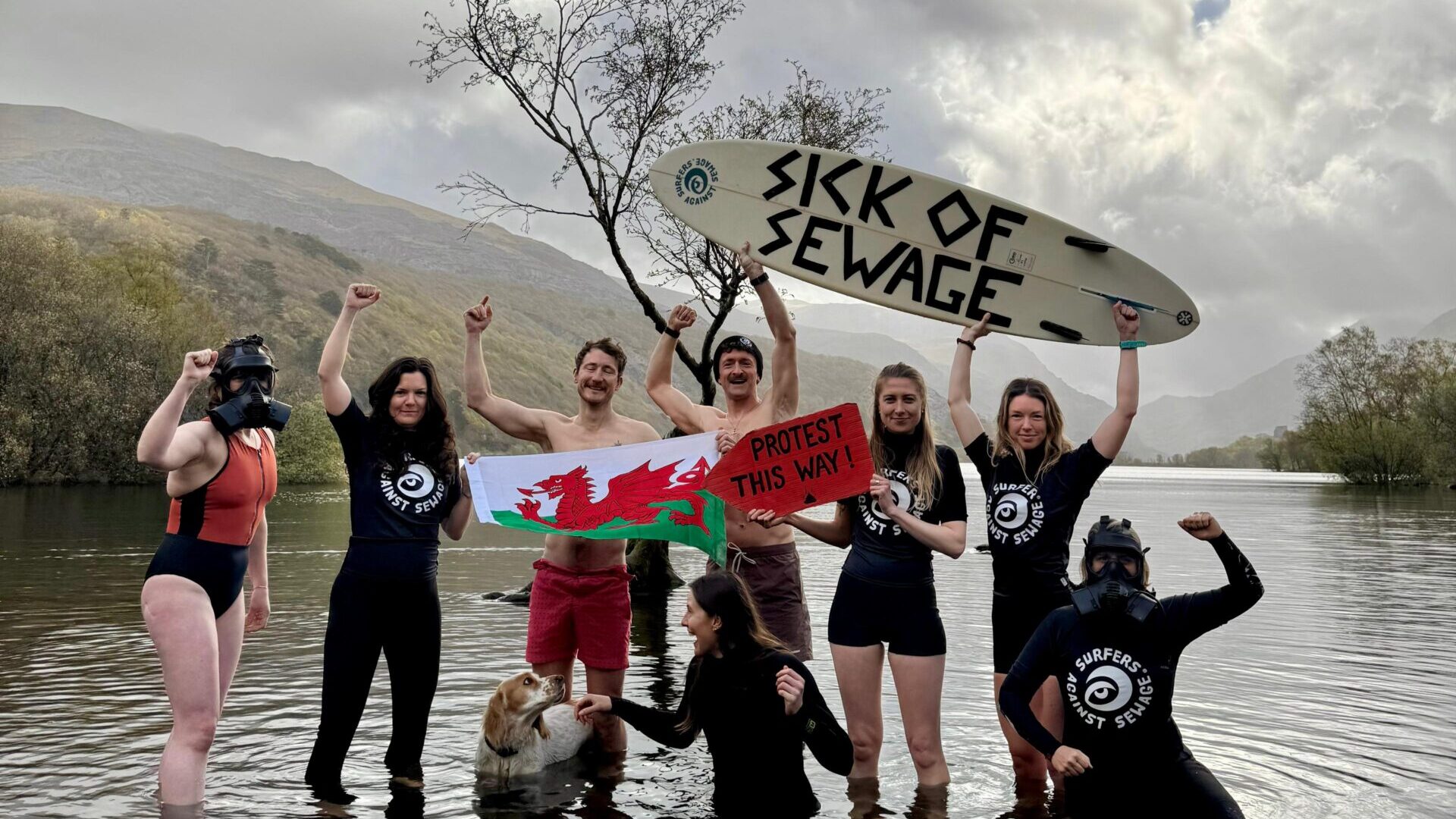
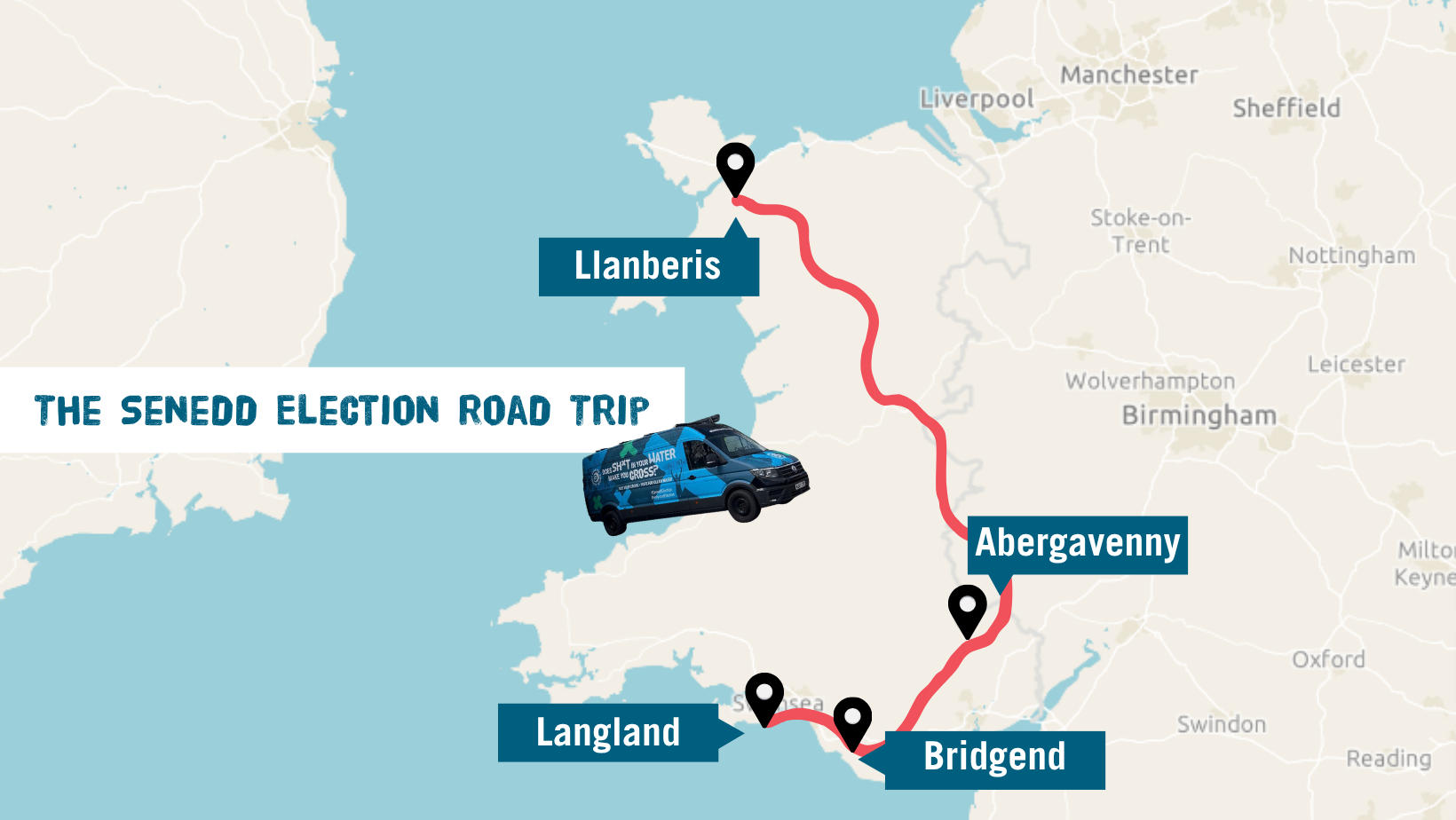
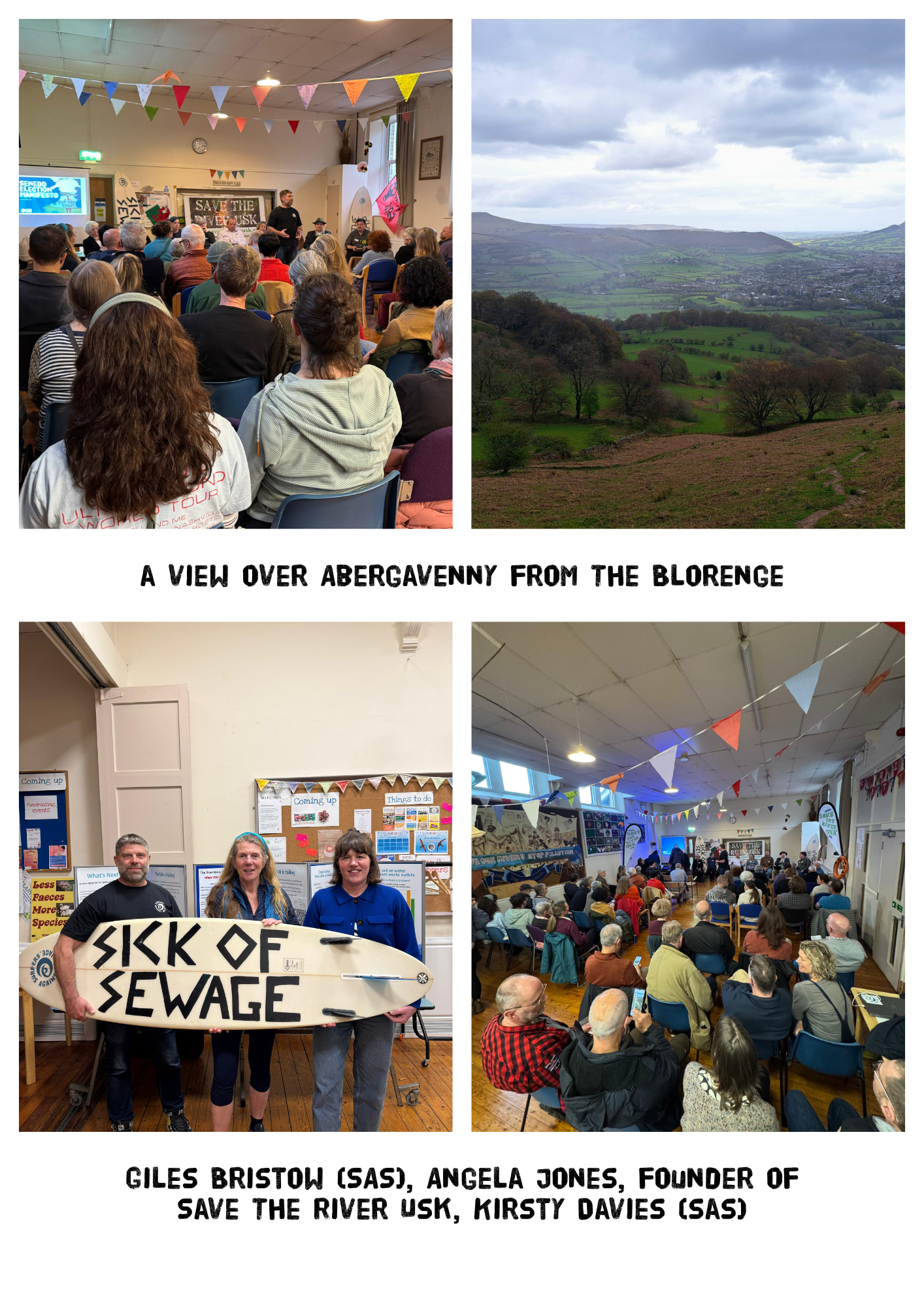
Ar ôl helpu Trash Free Trails i lanhau glan llyn a mynd i weld coeden unig Llyn Padarn, roddem nôl ar y lôn yn anelu am dde Cymru ar gyfer hystings olaf taith etholiad Cymru. Cyrhaeddom Ganolfan Gymunedol y Fenni a chwrdd ag Angela a Maxine a gweddill criw Achub Afon Wysg a oedd yn cynnal yr hystings.
Mae Achub Afon Wysg yn grŵp cymunedol sy’n ymroddedig i wella ansawdd dŵr, gwarchod cynefinoedd bywyd gwyllt a hyrwyddo rheoli Afon Wysg a’r tir o’i chwmpas yn gynaliadwy trwy ymchwil wyddonol, ymgysylltu â’r gymuned ac eiriolaeth.
Ymunodd ymgeiswyr o saith plaid wleidyddol â ni: Y Blaid Dreftadaeth (Heritage Party), Democratiaid Rhyddfrydol Cymru, y Blaid Werdd (dau ymgeisydd), Llafur Cymru, Plaid Cymru a’r Blaid Agored.
Meysydd yr oedd pawb yn gytûn yn eu cylch
Roedd yr holl bleidiau’n cytuno ar gael model ‘llygrwr sy’n talu’ i ariannu trawsnewid y diwydiant dŵr yn llwyr er mwyn amddiffyn yr amgylchedd ac iechyd y cyhoedd. Roedd yr holl ymgeiswyr yn cytuno na ddylid cael gwared ar y rheoleiddiwr (Cyfoeth Naturiol Cymru), ond bod ariannu ac ailgyfeirio’r ffocws yn glir yn hanfodol. O ran amaethyddiaeth, cytunwyd yn frwd bod ffermwyr angen rhagor o gefnogaeth i symud i ffermio sy’n gynaliadwy ac adfywiol. O ran plastigion, roedd yr holl ymgeiswyr yn cefnogi defnyddio cynhyrchion a gwasanaethau lleol i leihau’r defnydd o eitemau untro, yn ogystal â chyflwyno cynllun dychwelyd ernes a map Cyfrifoldeb Cynhyrchwyr Estynedig (EPR).
Meysydd oedd yn destun anghytuno
Unwaith eto, roedd amrywiaeth barn ynghylch ail-wladoli cwmnïau dŵr Cymru, yn bennaf o ganlyniad i syniadau gwahanol (a lefelau dealltwriaeth) ynghylch sut fyddai’n cael ei ariannu. Roedd y drafodaeth ynghylch dirwyon a gorfodi yn amrywio, gyda rhai o’r ymgeiswyr yn awgrymu bod angen mesurau llymach megis diddymu trwyddedau gweithredu.
Yr hyn na ddywedodd neb
Er bod aelodau’r gynulleidfa wedi cyfeirio at iechyd y cyhoedd, nid oedd y mater mor ganolog i’r ddadl ag y gallasai fod. Ychydig iawn o sôn a gafwyd am ddeddfwriaeth bresennol y gellid ei defnyddio i fynd i’r afael â llygredd yn syth. Yn nodedig, ni thrafodwyd dyfroedd ymdrochi, y Rheoliadau Dyfroedd Ymdrochi na’r Papur Gwyrdd diweddar.
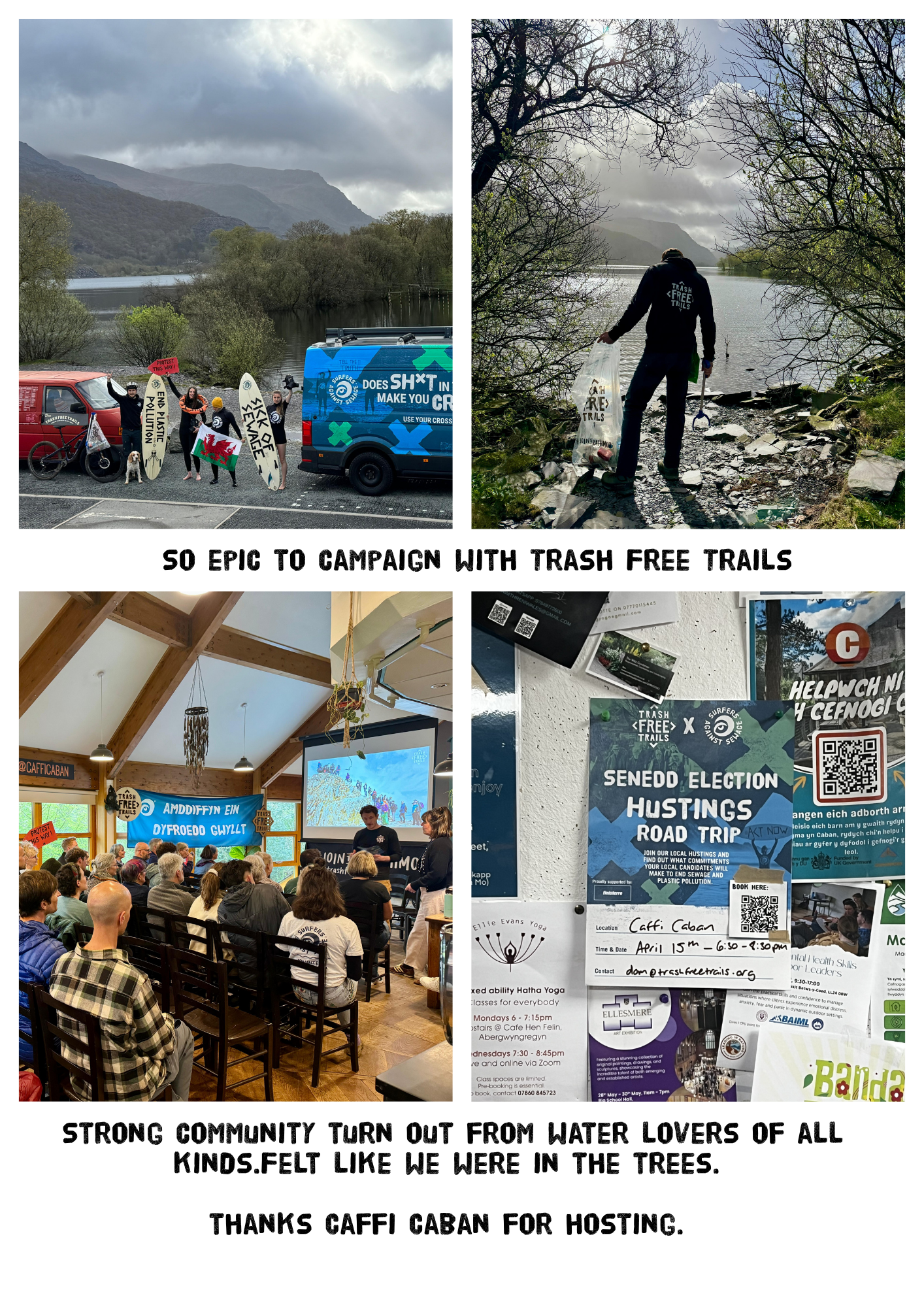
Roedd rhaid codi’n gynnar i ffarwelio â Phorthcawl a chychwyn ar ein taith i Lanberis ar gyfer hystings ar ymyl Llyn Padarn – un o’r unig ddyfroedd ymdrochi mewndirol yng Nghymru. Er gwaethaf hyn, nid oeddem yn gallu nofio yn ystod ein harhosiad gan fod ein hap Gwasanaeth Moroedd ac Afonydd Mwy Diogel yn dangos rhybudd am garthion. (Diolch Dŵr Cymru.)
Gwnaeth Meg (sydd hefyd yn gynrychiolydd Syrffwyr yn Erbyn Carthion) a Dom o Trash Free Trails gynnal yr hystings gyda ni. Mae Trash Free Trails ar ymgyrch i gysylltu/ailgysylltu pobl â natur drwy’r weithred syml o gael gwared ar lygredd untro o leoedd gwyllt. Mae rhaglen gwyddoniaeth dinasyddion a phecynnau cymorth cymunedol y fenter yn wych. Cymerwch olwg arnynt yma.
Rhoddodd Tom o Gyngor Mynydda Prydain gyflwyniad yn Gymraeg. Yn anffodus, nid oedd modd i ni gynnal y digwyddiad cyfan yn ddwyieithog. Daeth Dr Emma Edward Jones o Eryri Actif â’r mater o ansawdd dŵr yn fyw gyda sgwrs am Lyn Padarn, ei ecosystem unigryw a’r gymuned sy’n brwydro i’w amddiffyn. Yna dechreuodd yr hystings.
Roedd cynrychiolwyr o chwe phlaid yn bresennol: Gwlad, Ceidwadwyr Cymru, y Blaid Werdd, Llafur Cymru, Plaid Cymru a’r Democratiaid Rhyddfrydol.
Roedd cymuned yn ganolog i’r sgwrs. Roedd cydnabyddiaeth a rennir na ddylai cymunedau dalu’r pris am lygredd a bod gwell cysylltiad â natur yn bwysig i iechyd, llesiant a newidiadau cymunedol hirdymor. Roedd y mwyafrif hefyd yn cytuno os yw twristiaeth yn codi refeniw, y dylai’r arian hwnnw gael ei fuddsoddi’n lleol a bod gan ffermwyr rôl i’w chwarae mewn datrysiadau amgylcheddol. Cytunodd pawb bod angen diwygio’r system yn gyfan gwbl er mwyn symbylu gorfodaeth a rheoli cryfach, buddsoddi sylweddol, gwell monitro a dwyn llygrwyr i gyfrif.
Unwaith eto, roedd y ddadl yn cynnwys ail-wladoli ynteu ddiwygio cwmnïau dŵr, creu rheoleiddwyr newydd ynteu ddiwygio neu gael gwared ar gyrff presennol a rôl y sector preifat. Roedd trethi twristiaeth yn hollti barn yr ymgeiswyr, yn enwedig o ran ymwelwyr dros nos/dydd. Roedd gwahaniaethau hefyd o ran cyflymder a graddau’r buddsoddiad. Clywsom hefyd wahaniaeth barn ynghylch ble ddylai lleihau plastigau eistedd.
Roedd manylion am brisiadau ac ariannu ar goll i raddau helaeth, gydag fawr ddim atebion clir o ran pwy sy’n talu a faint. Trafodwyd gorfodaeth mewn egwyddor, ond nid mewn ffyrdd ymarferol ar lawr gwlad. Cyfeiriwyd yn fras at faterion trawsffiniol, ond gellid bod wedi codi hyn fwy yn ystod y sgyrsiau.
Cafwyd llawer mwy o drafodaeth am lygredd untro y tro hwn!
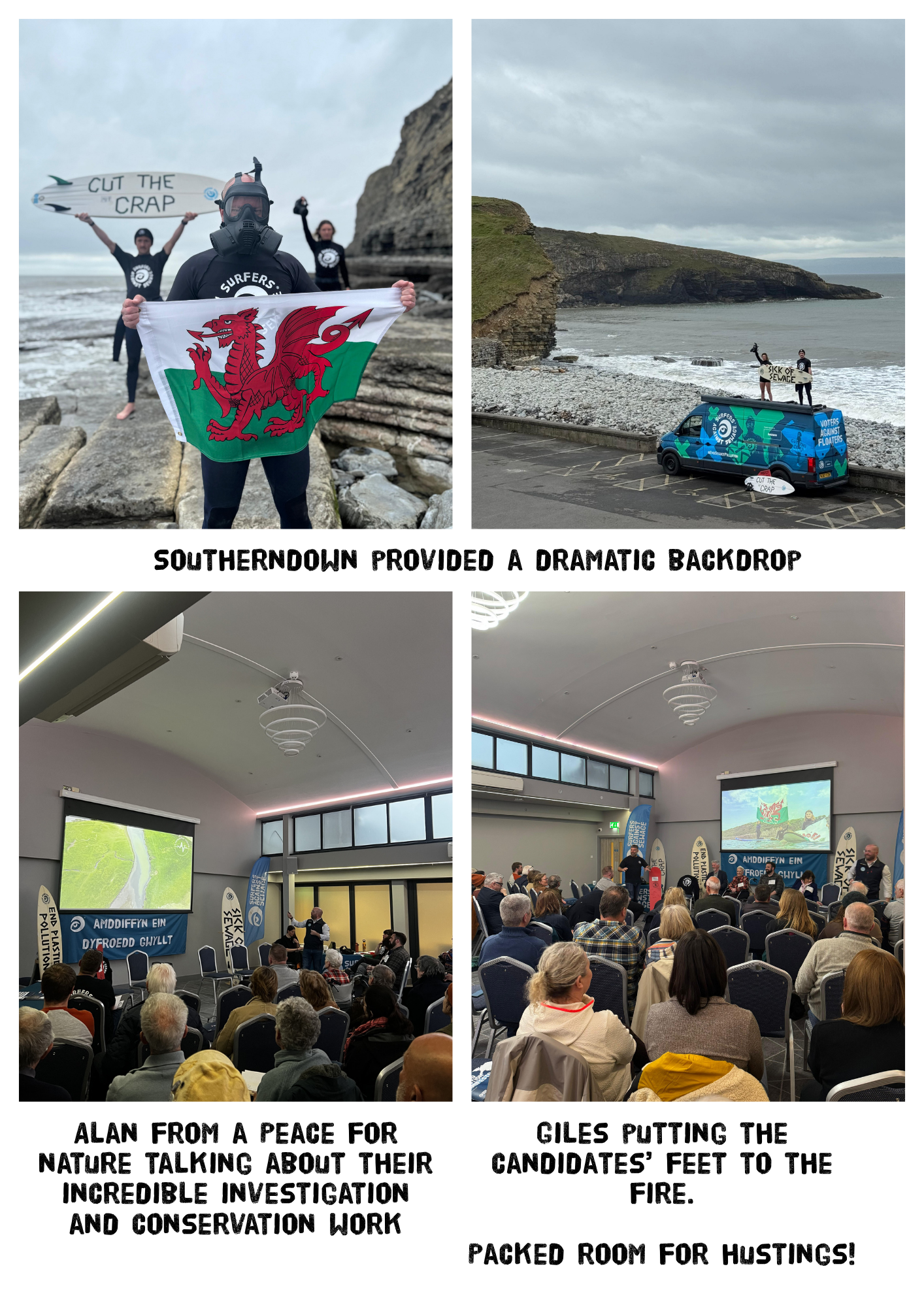
Cafwyd bore o gynllunio a sesiwn ffotograffiaeth gydag aelodau o’r tîm yn gwisgo mygydau nwy, cyn i ni gwrdd ag Alan Phillips o A Piece of Nature ar gyfer y briffiad hystings olaf. Mae Alan a chymuned Cwm Ogwr wedi bod yn brwydro i amddiffyn yr afonydd a’r morlin yn nalgylch Ogwr rhag llygredd o bob math. Chwiliwch amdanynt i gael yr hanes.
Ymunodd ymgeiswyr o bedair plaid â ni: Llafur Cymru, Reform UK, Plaid Cymru ac Annibynnol.
Mae angen diwygio’r diwydiant yn gyfan gwbl. Cytunodd pawb bod angen dŵr glân, gorfodaeth a rheoleiddio cryfach, buddsoddiad sylweddol yn y seilwaith, gwell cydlynu rhwng rheoleiddwyr a sefydliadau a dwyn llygrwyr i gyfrif. Roedd pawb yn cytuno bod angen arloesi mewn datblygiadau newydd a chynllunio.
Roedd y ddadl yn cynnwys ail-wladoli ynteu ddiwygio cwmnïau dŵr, creu rheoleiddiwr newydd ynteu ddefnyddio pwerau presennol a rôl y sector preifat. Unwaith eto, roedd trafodaeth ynghylch rheoleiddio yn ganolog, gyda rhai o’r ymgeiswyr yn cefnogi diddymu neu ddiwygio’r rheoleiddiwr ac eraill yn awgrymu ei bod angen rhagor o adnoddau. Roedd y farn am sut y dylid ariannu’r diwydiant dŵr yn amrywio, yn cynnwys trafodaeth am fodel ‘llygrwr sy’n talu’ a threthdalwyr yn talu am welliannau.
Unwaith eto, ni chafwyd llawer o drafodaeth am blastigau. Anwybyddwyd y pwnc iechyd y cyhoedd hefyd. Cafwyd rhywfaint o drafod am lais pobl ifanc, ond gellid bod wedi rhoi rhagor o sylw i hyn. Ychydig o ymrwymiadau pendant i amserlenni neu fuddsoddiadau.
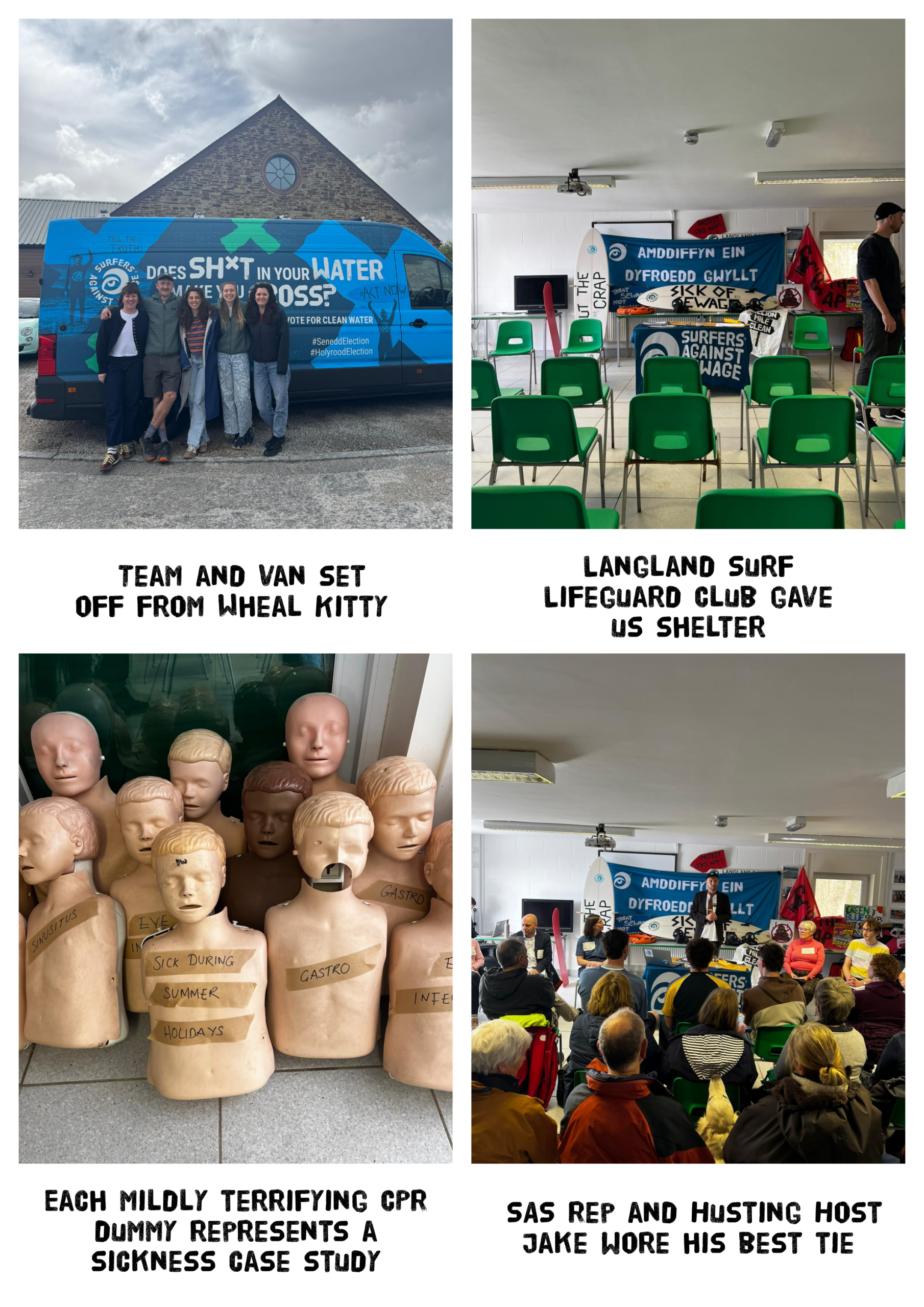
Ar ôl casglu’r fan trawiadol ar gyfer y Daith Etholiadol (diolch i Finisterre am gael benthyg y fan) ar y dydd Sadwrn, gwnaethom deithio ar hyd yr M4 i Borthcawl. Ar y dydd Sul, gwnaethom deithio i Fae Langland, ym Mhenrhyn Gŵyr, ar gyfer yr hystings cyntaf – dan ofal Jake a Ruby, sy’n gynrychiolwyr Syrffwyr yn Erbyn Carthion ers amser maith.
Yn 2025, roedd 227 o rybuddion llygredd ym Mae Langland, sy’n gartref i Toxic Trophy, sydd bellach yn gystadleuaeth syrffio enwog. Yn etholaeth Gŵyr-Abertawe, roedd 3,103 o ollyngiadau am 20,179 o oriau yn 2025.
Ymunodd ymgeiswyr ar gyfer etholaeth Gŵyr Abertawe o chwe phlaid: Democratiaid Rhyddfrydol Cymru, Llafur Cymru, Clymblaid Undebwyr Llafur a Sosialwyr Cymru, Plaid Cymru a’r Blaid Werdd.
Cytunodd yr holl ymgeiswyr bod y system ddŵr yn methu. Roedd y rhan fwyaf yn cefnogi rheoleiddio cryfach, gyda mwy o arian a staff ar gyfer Cyfoeth Naturiol Cymru. Roedd siarad cyson am dai newydd sy’n gofyn am well cynllunio seilwaith.
Cafwyd rhywfaint o drafodaeth ynghylch a oes angen diwygio’r system bresennol (rheoleiddio’n benodol) neu fynd ar drywydd newid strwythurol mwy sylfaenol, a sut i ariannu gwelliannau heb gynyddu biliau i gartrefi.
Cafwyd ychydig o ymrwymiadau amser-gyfyngedig ar ddod â gollyngiadau carthion i ben, a ffocws cyfyngedig ar lygredd plastig. Ni chlywsom fanylion am fonitro, gorfodi na dulliau dan arweiniad y gymuned.