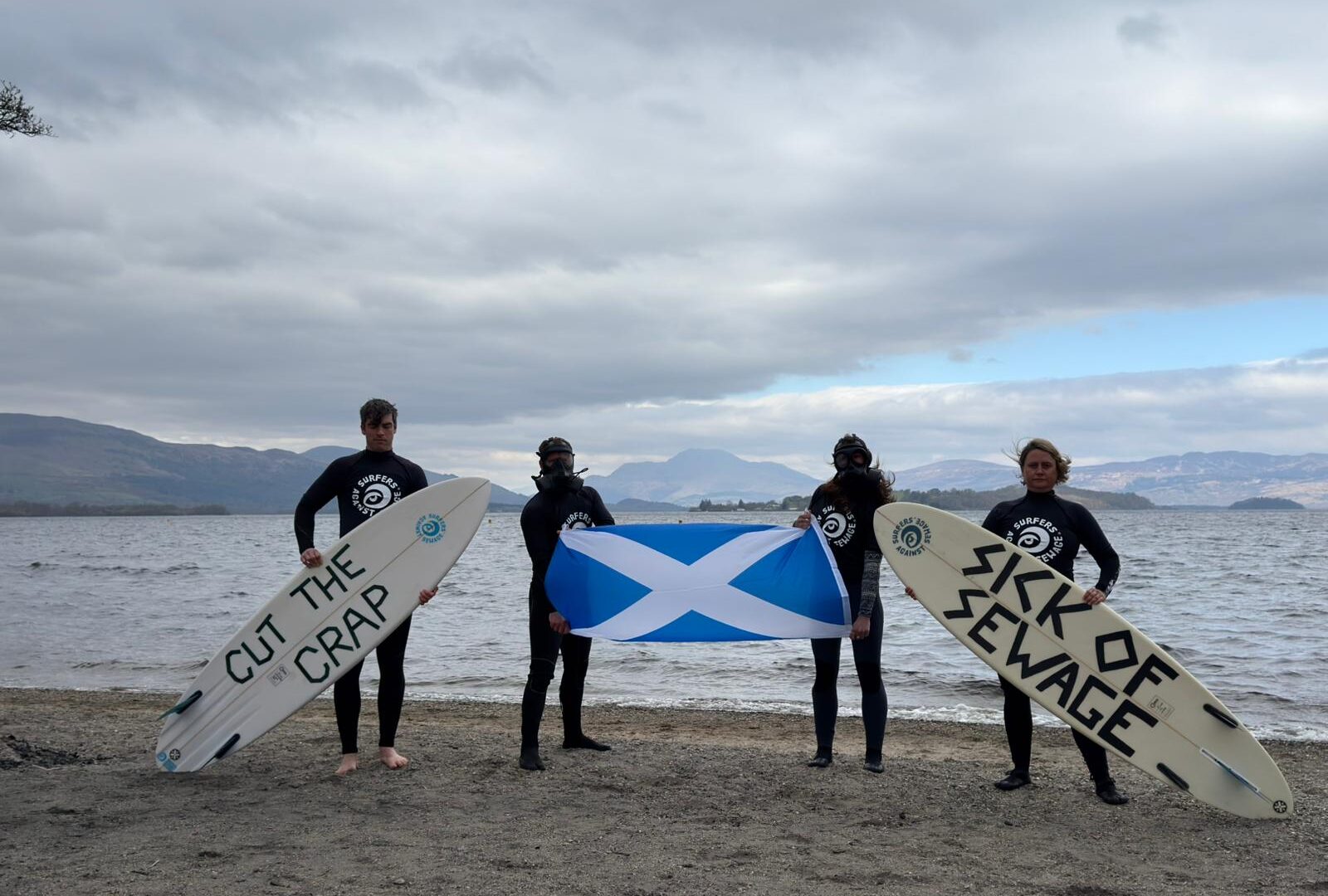
The Scottish Election Road Trip Blog
Behind the scenes on our two week mission to make sure candidates are taking sewage seriously.
Welcome to the blog for our Scottish election tour ahead of the Holyrood Elections on May 7th. Find out where we went for our hustings and what was discussed below!
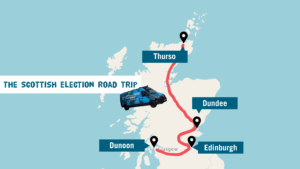
Day 4 – Thurso
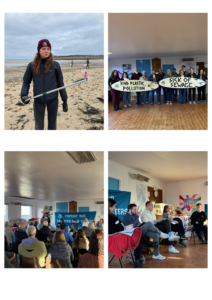
The Scottish sunshine continued to deliver as we made our way north to the iconic Scottish surf town of Thurso. Home to a stunning coastline of world-class surf breaks and a tight-knit community, the final Hustings of the tour was a highlight, bringing locals together to press MSP candidates on the toxic pollution of the area’s incredible surf breaks, rivers and lochs.
The Hustings was organised by local legend and Thurso Surf Club Chair, Jason Simpson, and SAS Ambassador, Phoebe Strachan. Throughout the evening, local surfers, business owners and community members spoke out to the candidates on the sewage issues plaguing the world-class waves in the area, including most recently during the Scottish national championships, where some competitors became sick afterwards.
TLDR: All parties agreed Scotland’s water quality is a public health risk, with only 30% of the network monitored – Lib Dems and Greens had the strongest pledge to 100% monitoring. Public health was a key community concern, with attendees sharing stories of illness and sewage discharges during events, creating urgency around better testing. On accountability, Greens and Lib Dems committed to a Clean Water Bill and better-resourced SEPA, while Labour focused on management consequences and local reinvestment. SNP pledged to prioritise improving water quality in Thurso and fixing the issue as a priority if re-elected. Plastic commitments were limited and largely personal rather than policy-driven. Missing from the conversation entirely: a roadmap to a circular economy and tackling plastic at source.
Monitoring
Again, all parties agreed on the need for more monitoring and data – currently, only 30% of the Scottish Water network is monitored, which is not good enough. The Lib Dems and Green Party are committed to 100% monitoring, as per their party manifesto. The SNP stated that blanket monitoring of all overflows may not be the wisest approach, claiming that some overflows might not discharge – this was firmly challenged by the audience.
Public Health
Among the audience were many water users who had stories to tell of surfing and swimming in sewage and becoming sick afterwards, so protecting public health was a widely discussed topic. In addition to increased monitoring, recognising that this would take time, the candidates were asked whether increased testing could be introduced in the meantime to keep people safe. The SNP candidate was keen to explore this. Labour agreed that safety should be guaranteed at events, and the Lib Dems pledged that they want to improve testing so that all water users are counted, and water quality is tested more regularly than the current bathing season. The Green Party continued to push its pledges of an Ecocide Bill and a Human Rights Bill that enshrined an enforceable right to a healthy environment and clean water. SNP wanted to use public health framing to focus on human risk and apply a zero-tolerance policy where the risk is high, expressing that there would be a strong case for areas like Thurso to be tackled as a priority, which they promised to do if re-elected.
Accountability
Consensus among the parties that sewage pollution is unacceptable and is a cross-party issue. The Green Party pledges to strengthen accountability through an environmental court to hold polluters to account, and to adopt a polluter pays principle through fines and levies. Along with the Lib Dems, the Greens are committing to a Clean Water Bill. Both the Greens and Lib Dems spoke to SEPA’s underfunding and the need to improve this so it can effectively do its job. Labour highlighted the potential problems with fining public services that are funded by taxpayers, but pressed for consequences for management (who still receive bonuses) and wanted local reinvestment to be at the forefront. The SNP again supported the need for Scottish Water to remain publicly owned so that money is reinvested into infrastructure.
Plastic pollution
Scotland’s north coast is plagued by plastic pollution, and it is an issue that the local community feels very strongly about, especially with regard to fishing gear. It’s important to note that the candidates broadly spoke from a personal perspective regarding plastic, with few clear manifesto commitments. When pressed on tackling plastic pollution, the SNP pledged to ban wet wipes, noting that fishing gear and ropes are more difficult to ban. Greens pushed a scheme with dedicated disposal sites for fishing waste. Lib Dems stated that becoming plastic-free once felt impossible, now plastic can be replaced but it will cost money. The party wants to see targeted programmes to eliminate plastic from the supply chain. Labour wants to work with industry to reduce plastic use and argues that more education and enforcement needs to be introduced to tackle littering, such as greater fines to change human behaviour.
What else was mentioned
Locals raised concerns over pollution from campervans on the NC500 route and a lack of infrastructure to manage waste. Farm run off was also raised as a major issue in Thurso, with the combination of run off and sewage.
What wasn’t mentioned
There was no discussion or promises on the roadmap to a circular economy, or how to tackle plastic production from the most polluting brands. SEPA’s responsibility or effectiveness was not discussed in detail.
Day 3 – Dundee
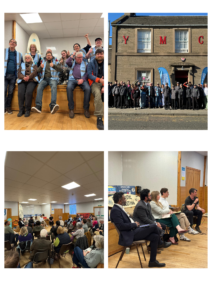
The third day brought blazing sunshine and blue skies for the team in Edinburgh. Kicking off with a beach clean on Portobello Beach with the leader of the Lib Dems, it was then back in the wagon for a quick trip up to Broughty Ferry in Dundee.
Home to a beautiful estuary, beach and an epic community, the Broughty Ferry hustings had a strong turnout where the locals pressed the candidates on plastic pollution and water quality. Additionally, the event celebrated the town being awarded official Plastic Free Community status. The sense of community here really is special, with the volunteers putting on huge beach cleans each month, taking local action on plastic pollution and getting businesses on board as Plastic Free Champions.
TLDR: Four candidates put forward their pledges on sewage and plastic pollution, with a consensus that more needs to be done to combat sewage pollution in Scotland’s wild waters. All parties talked about bans and moving towards a more circular economy, but no one put forward any commitments to tackle plastic production.
Monitoring
The audience asked if parties would commit to 100% monitoring. Whilst all parties expressed a need for increased monitoring in Scotland, the Lib Dems and Greens explicitly committed to 100% monitoring and a Clean Water Act. Labour called for monitoring to match the rest of the UK, but with no clear commitment. SNP promised to continue to work with Scottish Water to increase monitoring, with the target of doubling the number of monitors, but wanted to focus on tackling issues at priority-targeted sites instead.
Enforcing the law
Labour expressed the need to address bonuses paid to Scottish Water executives, and the option of capping or even removing bonuses, and reinvesting the money into the network. They are also calling for a greater scrutiny on Scottish Water, as well as the need to better fund SEPA to do its job properly. The Green Party pushed the need for an environmental court, expressing that they don’t want companies to build fines into their way of doing business, so this would add another layer of accountability. The SNP backs greater fines for polluters but warns of companies building fines into their business models.
Protecting public health
There was little discussion regarding strategies and policies to protect public health, other than the need to increase water quality monitoring. No discussion on designated bathing waters.
Plastic pollution
There was a lot of discussion on specifically banning wet wipes and single-use plastics across Scotland. The Lib Dem candidate stated that Scotland should ban single-use plastics, but with no clear strategy for this. The SNP candidate advocated the wet wipe ban, and placed an emphasis on personal responsibility and the support required from the Government to make recycling easier. SNP advocated for the DRS, but this was blocked by the UK Government. The Green Party maintained that banning single-use plastics is only part of the solution, and is pushing a repair voucher scheme as a move towards a circular economy. Labour wants to focus on a move toward a circular economy, making sure councils have fair funding to respond effectively. They also want to ensure that more waste is recycled in Scotland rather than exported. Whilst all parties want a move toward a circular economy, there was little detail on the roadmap to get there.
Also discussed were nature-based solutions, plus the desire to remove single-use plastics in supermarkets, with all parties acknowledging that these need to be addressed, but with no real solutions. Fly tipping and disposable vapes were also questioned, with parties promising increased fines and power to local authorities to clamp down on fly tipping, and the SNP promising to ban the display of disposable vapes.
Day 2- Edinburgh & Lothians East
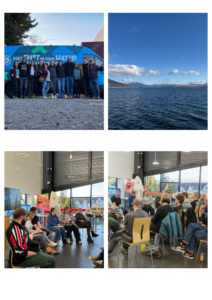
Up and out early to make the trip from the West Coast to the East Coast. After a stunning ferry trip over the Firth of Clyde, the crew made a quick pit stop at Lost Shore to meet one of the Regional Reps Kim, and jump in the pool for a few waves – absolutely worth a visit!
The Edinburgh Hustings saw six candidates gather at Edinburgh College, alongside a brilliant team of SAS Regional Reps: Elspeth, Brian and Kate and the local community to discuss the water quality issues in the area and what each party plans to do about it.
Candidates who attended the hustings: Astri Kvassnes (Greens), Chris Cullen (Communist Party of Britain), Jeremy Balfour (Independent), Liss Owen (Lib Dems), Lynn Ann Jardine (SNP), Ally Maxwell (Scottish Socialist Party).
TLDR: All candidates agreed that sewage and plastic pollution are not an England-only issue. In Scotland, water quality and the lack of monitoring of storm overflows are greatly impacting the environment and public health. Parties disagreed over the extent of the radical economic transformation to end sewage pollution in Scotland, however, across the board, there was recognition of SEPA’s underinvestment and that massive investment is required to restore Scotland’s wild waters.
What was said on each Manifesto point
Monitoring
- All parties expressed a need for Scotland to have better monitoring. In particular, the independent candidate urged the need for more data and good use of data for all environmental and social issues.
Enforcing the law
- Green party wants Scottish Water to have the power to enforce developers to stop runoff and improve new blue/green infrastructure and a commitment to a Clean Water Act and environmental responsibility bill. Learning from other models – polluter pays principle, so that the cost of pollution isn’t passed onto the tax payers
- Indepdendent candidate was supportive of the Clean Water Bill Act to improve data and accountability. Good legislastion does exist, but inforcement is the issue and that requires better funding.
- Communist candidate suggested a fundamental re-organisation of industry and society, the need for corporations to pay for improvements and remove monopolies, and for the economy to be designed around the needs of people and the environment
- SNP – supportive of overhauling regulators to find a more efficient system.
Investment
- SNP – commitment to continued investment in the wastewater infrastructure and better monitoring, increased trasparancy and more accountability
- Indepdent – realistically, budgets elsewhere would need to be cut to fund the neccesary changes
- Green party candidate also proposed taxing the rich to pay for the investment needed.
Public health
- All parties recognised the impact that poor water quality has on public health
- The SNP candidate spoke passionately about her local swim group and the fact that swimming in the sea has enough risks, and poor water quality and sewage pollution should not be one of these risks
- The Lib Dems pushed forward their policy on testing bathing waters all year round, Lib Dems commiment to monitor 100% overflows and improve funding for SEPA for better enforcement, sustainable drainage and decreasing the amountg of runoff that goes into the system and better legislation to improve enforcement.
Bathing water designation
- Lib Dems recognised the importance of extending recognition to more water users to include surfers, paddle boarders, kayakers and more, not just bathers.
Plastic
- Communist, Green and Socialist parties agreed on the need to cut plastic production at its source, but they disagreed on what extent the entire economic system needed to be overhauled to achieve this
- Lib Dems pushed the need for coffee cup charges and DRS
- There was a consensus in the room that for too long, the onus has been on citizens to reduce plastic use and to recycle, whereas the real issue is with plastic production, however the suggested solutions and policies varied
- Indepdenet candidate highlighted the issues with lack of data, and not having the righyt information on which to base decision.
What wasn’t really said
None of the candidates spoke explicitly about increasing the number of designated bathing waters.
Day 1 – Dunoon Hustings
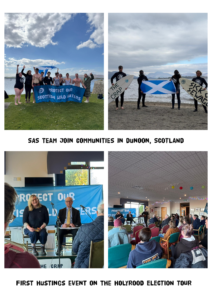
On the road again! After a regroup in Cornwall, the Finisterre x SAS Election Tour van hit the road for the second leg of the tour, all the way up to Scotland. Dunoon in Argyll & Bute was the first Hustings of the tour, after a quick stop in Toward to meet some of the local communities. Big shout-out to Lorna, Tracy, Angela, and the crew running Sauna Mara, who hosted us for the afternoon with an idyllic sauna, dip, and support in organising the Hustings.
Argyll & Bute is home to over 3,000km of coastline, but it only has four designated bathing waters.
The lowdown on the event: two candidates, a big acknowledgement of the problem and the need to do better. The local community showed up in force with a range of tough questions for the candidates: from achieving full monitoring, to protecting the health of water users and questions around new developments and misconnections. The candidates were: Jenni Minto, former MSP for Argyll & Bute (SNP) and Alan Reid (Lib Dems).
TLDR: the SNP candidate was set on improving the status quo and defending the SNP policies so far, as well as acknowledging the need for more to be done in terms of monitoring and protecting public health. The Lib Dems put forward specific policies to improve monitoring, bathing water testing and the lack of investment in SEPA. However, they lacked detail of how this was going to happen.
What was said on each Manifesto point
Monitoring:
- Both parties agreed that an increase in monitoring was critical and acknowledged the problem
- The Lib Dems are committed to achieving 100% monitoring, whilst the SNP promised an increase, but no concrete commitment.
- Lib Dems explicitly spoke on the budget constraints of SEPA to do its job effectively
- Both parties agreed that citizen science can play a crucial role in water quality monitoring, and keen to work closely with local communities
Enforcing the law:
- Both agreed that water in Scotland should remain publicly owned
- Lib Dems are pushing a Clean Water Act that mandates an increase in sewage standards, long-term targets and community-driven investigations
- SNP spoke about how public ownership makes Scottish Water accountable and that there is a multi-billion pound investment plan from 2027-32. An increase in water quality monitoring is part of this plan, and Jenni will personally aim to drive this, if elected.
- The Lib Dem candidate was much more explicit in stating the failure of Scottish Water and the budget contraints of SEPA. Whilst supportive of SEPA, the Lib Dems want to adopt the polluter pays principle: cleanup for pollution incidents is paid for by the polluter.
- SNP acknowledged the increase in rainfall events due to climate change, and the need to act accordingly.
Public Health:
- The Lib Dems specifically mentioned the need to consider all water users, not just swimmers, for water quality testing and when designating a bathing water.
- The Lib Dems want to give the option for water quality testing for events
- The SNP candidate flagged a disparity between monitoring on the east coast vs. West coast- the east coast is significantly better monitored, and this needs to be addressed.
- As the previous Public Health Minister, Jenni Minto was clear on the importance of monitoring wastewater to spot emerging health issues.
Plastic
- Both parties agreed the need to ban plastic wet wipes: the SNP highlighted its single-use plastic ban and this was having an impact.
What wasn’t really said
- Neither candidate really addressed managing illegal spills
- The Lib Dems did not lay out how they would deliver the policies they are planning to put forward.
Also spoken about were the unique issues facing the Clyde and the wider Argyll & Bute region, including the impact of nuclear, misconnections on new housing and the unique solutions needed for isolated communities’ wastewater management, and the need for innovation to manage more extreme weather events and their impact.