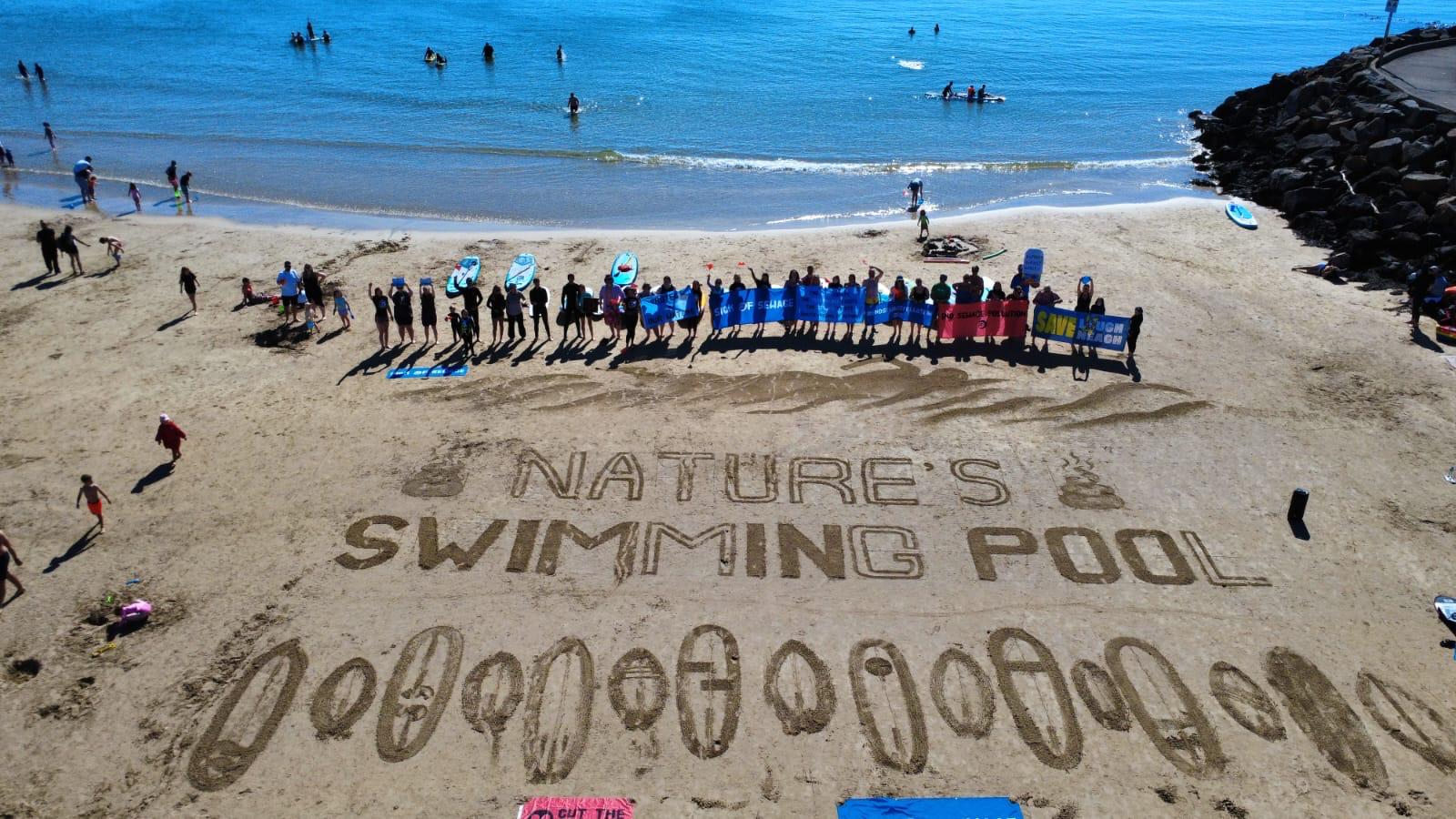
Northern Ireland Wild Waters Survey
Northern Ireland’s rivers, lakes and coastlines are used by people every day for swimming, surfing, paddleboarding, kayaking, fishing, wildlife watching and many other activities. Yet despite the growing popularity of recreational water use, significant gaps remain in how water quality is monitored, reported and communicated to the public.
To better understand how people interact with Northern Ireland’s waters and how water quality affects them, Surfers Against Sewage conducted a survey of recreational water users during summer 2026. The results paint a clear picture: people use our waters year-round, many have experienced illness after water exposure, and there is overwhelming support for greater transparency, expanded monitoring and real-time pollution information.
Respondent types of interaction with water:
The survey identified 22 different ways of interacting with water and the water environment, and 16 recreational water-based activities excluding environmental and shore-based activities such as beach walking, birdwatching, photography, litter picking and lifeguarding.
This data highlights that legislative wording needs to be changed from ‘bathing waters’ to ‘recreational waters’ when considering sites of water-use.
What time of year do you use NI’s Wild Waters?
84% of water users interact with water year-round
Have you become unwell (for example: sore stomach, ear infection, vomiting, diarrhoea, skin rash, breathing difficulties) after interacting with NI’s wild waters?
36% of surveyed water users have become unwell in some way after interacting with Northern Ireland’s wild waters and 15% think they may have become unwell.
If you remember a specific occasion where this illness, post-water interaction happened, please can you tell us the a. Environment (sea, river, lake) and place (example, ‘Portrush beach, East Strand’ ) b. sport/activity you were partaking in (surfing, swimming, sailing etc). c. the time of year and d. symptoms
a. Locations
From the locations mentioned in responses for where water users have become unwell/reported sickness, 12 distinct locations are Northern Ireland designated Bathing Waters in 2026. [nidirect.gov.uk]
| Places mentioned | NI Bathing Water? |
| Portrush East Strand (Curran) | ✅ |
| Portrush West Strand (Mill) | ✅ |
| Helen’s Bay | ✅ |
| Castlerock | ✅ |
| Brompton (Bangor) | ✅ |
| Crawfordsburn | ✅ |
| Cushendall | ✅ |
| Benone (Magilligan Benone) | ✅ |
| Rea’s Wood, Lough Neagh | ✅ |
| Portmuck | ✅ |
| Murlough (Co. Down) | ✅ |
| Portstewart | ✅ |
| Ormeau Embankment / River Lagan | ❌ |
| River Bann | ❌ |
| North Coast (unspecified) | Cannot determine |
| Sea (unspecified) | Cannot determine |
Bathing waters mentioned most often:
- Portrush (East/West Strand) – 35.7%
- Helen’s Bay – 28.6%
If the Water Is Excellent, Why Are People Still Getting Sick? Survey respondents reported a range of illnesses following water use at several designated bathing waters, including sites with “excellent” classifications. These accounts raise important questions about whether current monitoring and communication systems are providing the full picture and underscore the need to prioritise EDM data for affected locations.
b. Types of water interaction from sickness reports
| Activity / Water Interaction linked to sickness | Adjusted Count | Percentage |
| Swimming | 10.5 | 58.3% |
| Surfing | 4.5 | 25.0% |
| Kayaking | 1 | 5.6% |
| Canoeing | 1 | 5.6% |
| Shoreline visit (not entering water) | 1 | 5.6% |
| Total | 18 | 100.0% |
61% of illness reports involved swimming, while 39% involved other water-based or shoreline activities highlighting that illness is not confined to swimmers (bathers), with a substantial proportion of reports coming from surfers, paddlers, canoeists and other coastal users. We acknowledge that results may be skewed due to more swimmers responding to our survey than another water-users. Therefore, we have grounds to understand that water-users other than swimmers, are getting just as sick as bathers/swimmers.
c. Time of year sickness occurred
Of all the illness incidents reported, 56% occurred during Northern Ireland’s official bathing season (1 June to 15 September). Several additional reports could not be classified because respondents did not provide a month or season, meaning the proportion linked to the bathing season may be higher.
d. Sickness types
The symptoms reported by respondents are consistent with exposure to faecal contamination indicators used in bathing water monitoring, particularly E. coli and intestinal enterococci. Gastrointestinal symptoms such as vomiting, diarrhoea, nausea and stomach pain are commonly associated with exposure to contaminated water and ingestion of pathogenic microorganisms linked to faecal pollution. Skin irritation, rashes and allergy-like reactions can also occur following exposure to polluted water or algal blooms, while ear and respiratory infections are often associated with contact with contaminated recreational waters. The presence of E. coli and enterococci does not necessarily cause illness directly, but indicates that faecal contamination is present and that other disease-causing pathogens may also be in the water.
There was a correlation between locations and sickness types. All sickness reports from areas where Blue-green algae is likely present (such as Lough Neagh) had respiratory symptoms, and areas with likely sewage discharges (such as Portrush) had symptoms linked to e.coli, such as vomiting, stomach aches and diarrhoea.
Have you ever decided to not enter the water because of potential pollution? (use of word ‘potential’ = because there is currently no available live sewage data for public – which we advocate for – to assess this).
51% of respondents have avoided entering the water after a potential pollution event.
Bathing water’s water quality are currently only calculated based of the ‘bathing season’ (1st June – 15th Sept). How helpful would it be for you to know that a bathing water site is safe year round?
A clear majority 58 of respondents supported year-round testing, monitoring and reporting. Those who were neutral did not reject the need for greater monitoring; rather, they questioned the reliability of existing water quality assessments, noting that they had experienced illness after using bathing waters classified as having “excellent” status during the summer. This points to a broader challenge around public confidence in current monitoring and reporting systems and the need for real-time sewage monitoring and alerts.
Do you interact with wild waters that do not have ‘bathing water status’?
a. 72% of respondents use water bodies which do not have bathing water status, highlighting the need for more sites to be designated.
Based on the 23 illness reports that included a location or waterbody:
- Coastal waters (sea/coast/beach locations): (78%)
- Inland waters (rivers and lakes): (22%)
This indicates that reported health impacts were not confined to inland waterways, with most incidents occurring at coastal locations, including several designated bathing waters.
b. Since many respondents has answered stating they use wild waters which are not included, we contacted many of them to ask which waters these were that aren’t included. These were the results:
Potential Coastal Recreational Water Sites for Designation / Monitoring
| Location | Why Consider It? |
| Cushendun Beach | Identified in your survey; popular for sea swimming but not currently designated as a bathing water. |
| Glenarm | Growing use by sea swimmers and coastal recreation users. |
| Ballycastle Harbour / Marina | Significant recreational use beyond the existing bathing beach area. |
| Carnlough Harbour | Popular for sea swimming and coastal water recreation. |
| Ballintoy Harbour | Well-known location for swimming, paddling and tourism activities. |
| Whitepark Bay | Popular beach for sea swimming and recreation but not currently designated. |
| Ballygally Beach (additional recreational access points) | Recreational use may extend beyond the current monitored area. |
| Newcastle Harbour Area | Significant water sports activity beyond the designated bathing water location. |
Potential Inland Recreational Water Sites for Designation / Monitoring
| Location | Why Consider It? |
| Lough Neagh (additional sites: Ballyronan, Kinnego, Oxford Island, Antrim shore) | Northern Ireland’s largest lake; extensive recreation but only one designated inland bathing water. |
| River Bann | Popular for kayaking, canoeing, paddleboarding and angling. |
| River Lagan | Significant urban recreation corridor and paddlesports destination. |
| Lough Erne | Major tourism, boating and open-water recreation destination. |
| Camlough Lake | Established open-water swimming location. |
| Castlewellan Lake | Popular for swimming, kayaking and paddle sports. |
| Craigavon Lakes | High levels of recreational water use in an urban setting. |
Northern Ireland currently designates 33 bathing waters, but only one inland site (Rea’s Wood) is included in the programme. As recreational use of rivers, lakes and coastal waters continues to grow, there is a strong case for expanding the monitoring network to better reflect how people actually interact with water. Any future approach should consider the needs of all recreational water users, not just bathers, including surfers, kayakers, paddleboarders, rowers and open-water swimmers, ensuring that all groups benefit from water quality monitoring, public information and legislative protections that support safer access to the water environment.
Water users in Wales, England and much of Scotland have access to real-time sewage discharge alerts (that cover a much wider network of blue spaces that are not official bathing waters) which users can access on Surfers Against Sewage’s Safer Seas and River Service app, do you believe we should be able to access the same data in Northern Ireland?
Support for access to real-time sewage discharge information was unanimous among survey respondents. All (100%) of respondants agreed that water users in Northern Ireland should have access to the same real-time pollution alerts currently available to users in Wales, England and parts of Scotland through Surfers Against Sewage’s Safer Seas and Rivers Service. No respondents opposed the proposal.
This result demonstrates a clear public demand for greater transparency around water quality and sewage pollution, particularly across the wider network of coastal and inland recreation sites that fall outside the current bathing water monitoring programme. The findings suggest that water users want timely, accessible information to help them make informed decisions about when and where it is safe to enter the water.
Would you interact with wild waters differently if you could understand when and where sewage discharges are taking place?
The survey results show that water users do not simply want access to pollution data; they intend to act on it. The finding that 95% would change their behaviour if sewage discharge information were available demonstrates the practical value of real-time reporting as a public health tool, enabling people to make informed choices about recreation and reducing avoidable exposure to pollution.
Do you have any thoughts and opinions you would like us to feed into our response? We had a lot, so here are a few:
Why is raw sewage discharged into the sea near Glenarm? This should be stopped NOW.
Lough Erne used by community all year round but no testing. People swim, paddle and fish all year round the main town Enniskillen is on an Island there is a water taxi and lots of people who work in and on the water but no data about water quality available.
I wrote to the local council in Newtownabbey about the state of Loughshore beach ( including the obvious sewage contamination) and they informed me the council didn’t have jurisdiction over the beach so I wrote to NI water who said they were aware of the pollution problem with sewage discharge but had had no investment from the executive to do anything about it. What level of investment is required to clean up NI waterways and seas? Lough Neagh is an ecological disaster and that impacts our beaches too.
Yes let’s not discharge sewage into the waters, it’s ludicrous that we’re doing this in a developed country.
Increase fines for farmers polluting bathing waters.
Urgent need to fix green algae problem.
Real time information is the only information worth having.
We absolutely should be informed when these discharges are taking place, instead of having to guess. Our waters are so important for so many, locals and visitors alike. It’s just terrible that businesses have had to close, some permanently, due to the blue green algae.
There seems to be an important distinction between the data being available and the public being properly warned when sewage is actually being discharged. Why is there such a closed door policy or lack of transparency in regard to these sewage spills that can potentially be health threatening!
People in NI need real-time, accurate and transparent data to inform their decisions about whether to interact and enter an aquatic habitat in light of potential impacts on their health due to insufficient capacity constraints within NI’s wastewater system, abundance of private wastewater tanks and significance of the agri-food industry in NI. If anything, NI is the most in need area for informative data about water quality due to these reasons.
I don’t want to know when the waters are polluted as much as I want to know that keeping them clean is the highest priority.
As someone with underlying health issues I am aware that choosing to swim in waters where I don’t have up to date data is an increased risk. This has resulted in ear infections etc which could potentially have been avoided had I had access to water quality data.
It deeply saddens me that NONE of our rivers or bodies of water are truly clean and free from pollution. When we spend time in Canada and can freely wild swim when out cycling or running, without a second thought, it really highlights how disgusting our waterways are here. We should be ashamed.
After watching Dirty Business, I’ve become very concerned about the state of our water and worry about my child (or myself) playing in water I don’t have safety data on – for instance Belvoir Forest, Cregagh Glen, etc. It also made me nervous to let him play at the beach in Castlerock over the Easter holidays since it wasn’t bathing season so there were no alerts or data.
Cut the crap! And more seriously, I always freak out to leave my kids play at the beach in case there is a sewage spill. I can never be 100% confident. Let our children and the children of our children enjoy our wonderful Wild water.
We need to do better as a collective or we won’t be able to enjoy this years from now in the same way we did years ago.
The message from Northern Ireland’s recreational water users is unmistakable. Water use does not stop when the bathing season ends, and neither do the risks posed by pollution when the season starts. With 84% of respondents using wild waters year-round, 36% reporting illness after water exposure, and 100% supporting access to real-time sewage discharge information, there is a strong public mandate for change.
People want access to reliable, timely information that helps them make informed decisions about where and when it is safe to enter the water. They also want monitoring and protections that extend beyond a small number of designated bathing waters and better reflect the diverse ways people interact with rivers, lakes and coastal waters.
As policymakers consider the future of Northern Ireland’s bathing water framework, these findings provide an important reminder: water quality is not just an environmental issue, it is a public health issue. Any future system must put recreational water users at its heart, deliver transparency, and ensure that everyone can access and enjoy clean, safe waters all year round.
Other reports and data to look at in the Northern Ireland context
Water Quality Report 2025 – Surfers Against Sewage