13 New Bathing Waters in England
People power works! A landmark victory for England’s wild waters.
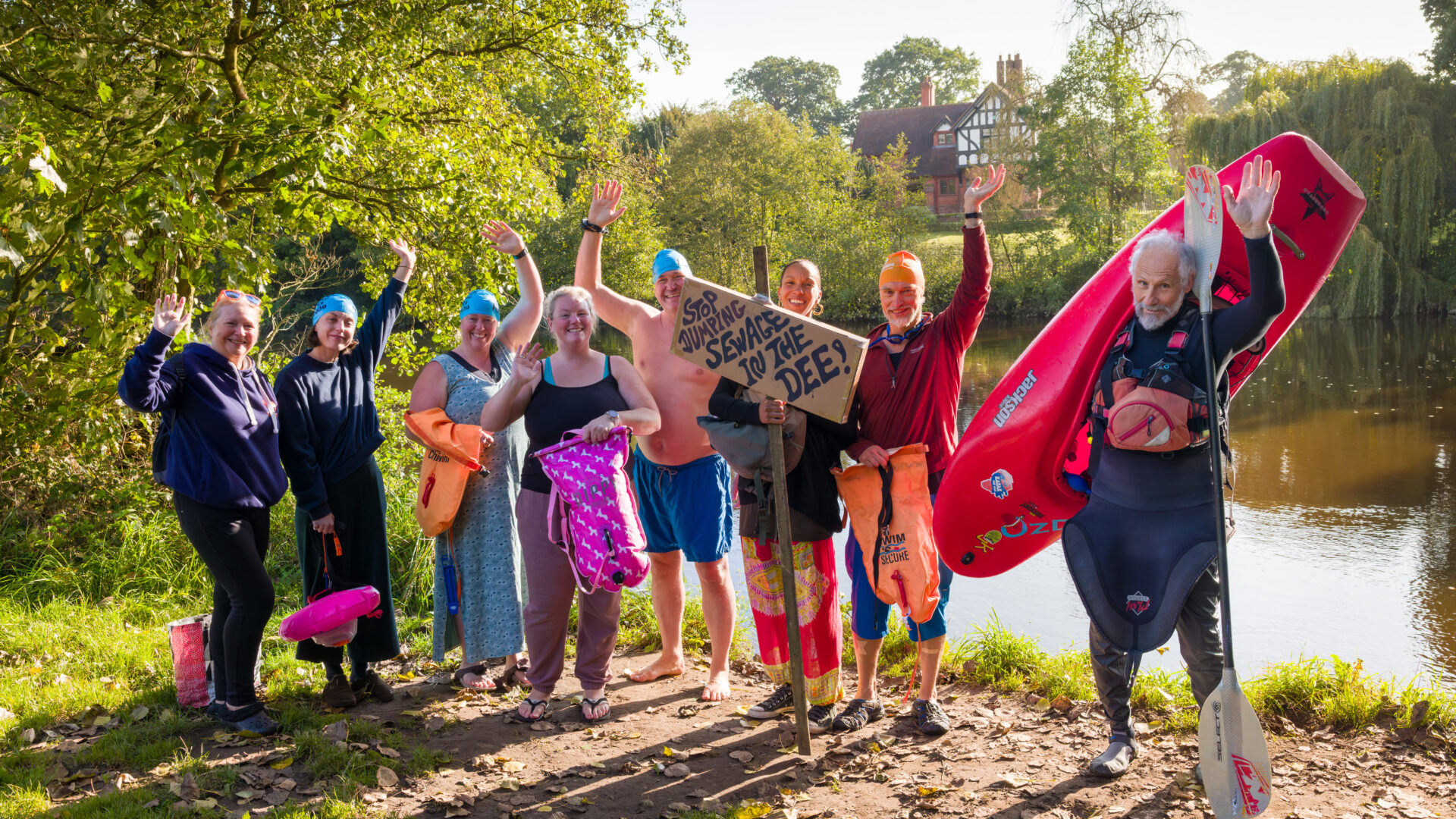
Today, we officially have 13 new protected swim spots in England! Today’s designations are a huge, huge win, and are the result of years of grassroot community effort. Of ordinary people who love their wild waters and did everything they could to protect them. Of swimmers who want to jump in the water without fear of getting sick, and are fighting for that right.
Today is unequivocally a moment to celebrate. Each of these new bathing sites is proof that each of us, as individuals, can make a real, tangible difference. The communities who have applied, ten of which we were so proud to support through Protecting Wild Waters, deserve to be celebrated. They’ve done more than most in Westminster.
Meet the new swim spots in town…
- Little Shore, Amble, Northumberland
- Newton and Noss Creeks, Devon
- Canvey Island Foreshore, Essex
- Sandgate Granville Parade Beach, Kent
- Queen Elizabeth Gardens, Salisbury, Wiltshire
- East Beach at West Bay, Bridport, Dorset
- Pangbourne Meadow, Berkshire
- River Fowey, Lostwithiel, Cornwall
- River Swale, Richmond, Yorkshire
- Falcon Meadow, Bungay, Suffolk
- River Thames at Ham and Kingston, Greater London
- New Brighton Beach (East), Merseyside
- River Dee at Sandy Lane, Chester, Cheshire
Rivers are firmly in the spotlight
Of the 13 newly designated sites, 6 are river locations. That’s bloody amazing.
For decades, England’s bathing water protections have been almost exclusively focused on the coast, despite millions of us swimming, paddling and jumping into our rivers. Only in 2021 was the first site on a river designated: the River Wharfe in Ilkley. And since then there’s been a flurry more – but nearly all of them are consistently receiving ‘poor’ bathing water classifications. Yet we know our rivers are being treated like open sewers. Only 14% are in ‘Good’ ecological state. Some of the newly designated sites – particularly those on rivers where pollution sources haven’t yet been fully investigated – we’re expecting to have ‘poor’ water quality. But that’s not a reason to be hopeless. Designation exposes the problem. Then it has to be fixed.
The new river sites include:
- The River Swale at Richmond, North Yorkshire
- River Dee, Sandy Lane, Chester
- River Avon, Queen Elizabeth Gardens, Salisbury
- River Bungay, Falcon Meadow
- River Thames, Pangbourne Meadow
- River Swale, Richmond, North Yorkshire
- River Thames, Ham and Kingston
The first swimspot on the River Thames in London
Think you shouldn’t swim in the Thames? Think again.
Our most iconic river, in the capital city of our watery nation, finally has an officially designated swimspot. For the first time ever, we’re going to have data from the Environment Agency (EA) on how safe it is to swim in the Thames. (Of course, citizen scientists have been testing for years… .)
The stretch at Ham and Kingston – between Teddington Lock and the Kingston riverbank – is loved by Teddington Bluetits and the Ham and Kingston Bathers. The community there led the application, representing everyone who dips there. They gathered the evidence, built the case and submitted the formal application. Their message was simple: Londoners are already swimming here. It’s time they were protected.
Marlene Lawrence, Leader and Founder of the Teddington Bluetits chill swimmers, said:
“We are absolutely delighted to have achieved Bathing Water status for the Thames at Ham and Kingston. The river is widely used by all ages to swim, row, paddle and sail, and it is wonderful to have such a natural resource to use to enhance our health and mental well-being.
“With water testing throughout the bathing water season, I really want to encourage more people to enjoy leisure time in and on the Thames here”.
This is a landmark victory. In the 1950s, the Thames was declared biologically dead. Now it has a legally recognised swimspot.
That transformation didn’t happen by accident. It happened through consistent environmental pressure and campaigning by local people – and today’s news represents that.
Meanwhile, Thames Water is rated the worst water company in England by the Environment Agency. All eyes are on the EA.
How do these new bathing waters create change?
Bathing water designation shouldn’t be a superficial title. It’s a legal obligation, and the burden falls squarely on polluters and the environmental regulator to investigate and clean up any pollution. Each of these sites is now protected by the Bathing Water Regulations.
Once a site is designated, the Environment Agency is required to monitor water quality throughout the bathing season (15th May to 30th September), testing for bacteria harmful to human health, including E. coli and intestinal enterococci. At the end of each season, every designated site is given a classification: ‘excellent’, ‘good’, ‘sufficient’ or ‘poor’.
That classification is displayed publicly – on signs at the water, online, for anyone to see. It cannot be hidden. And if a site is rated poor’, people are advised not to swim.
Designation is also a lever. Its one of the very, very few legal mechanisms we can rely on to protect our seas, rivers and lakes. Once a swim spot gets the official tick, there is legal and regulatory pressure on the water companies and landowners responsible for pollution in that area to investigate and fix the sources. Bathing water status has driven real investment at other sites around the country. It changes the dynamic. Communities aren’t asking nicely for clean waters. Regulators are legally obliged to act.
Is your swimspot next? Here’s how to apply
Today’s new sites didn’t just happen. Every single one started with someone who loved their local river, lake or stretch of coast and decided to protect it.
The good news is that anyone can apply for bathing water designation. You don’t need to be a council, an NGO or an expert. You need evidence that people are already using the water, the support of your community, and the willingness to make the case.
Our Protecting Wild Waters campaign exists precisely to help you do that, with a free step-by-step toolkit, template letters, campaign guidance and direct support from us (Kirsty and Lizzie, to be specific.
What does a bathing water application involve?
In England, an application goes to Defra and needs to show:
- Bather counts – evidence that an average of at least 100 bathers use the site on a peak day during the bathing season (15 May to 30 September). You’ll need to carry out surveys yourself, on busy warm days, and photograph the site while you count.
- Toilet facilities – there must be publicly accessible loos within around 500 metres of the site.
- Landowner and local authority support – you’ll need a letter from the local authority and, if the land is privately owned, from the landowner.
- A local consultation – you must run at least a six-week public consultation during the bathing season in the year you apply, gathering views from local people, organisations and businesses.
Applications are submitted to Defra by 31 October each year, with successful sites considered for designation ahead of the following bathing season.
The process is the campaign
One thing we’ve learned is that going through the application process is itself an act of campaigning. Counting bathers builds your evidence base. Consulting the community builds your people power. Contacting your MP and local councillors puts your swimspot on their radar. The application isn’t just a form, it’s the beginning of a sustained push to hold polluters and regulators to account.
The communities that secured today’s designations are proof that it works. If your river, lake or stretch of coast deserves to be on that list, we can help.
Or get in touch with Kirsty and Lizzie at [email protected]