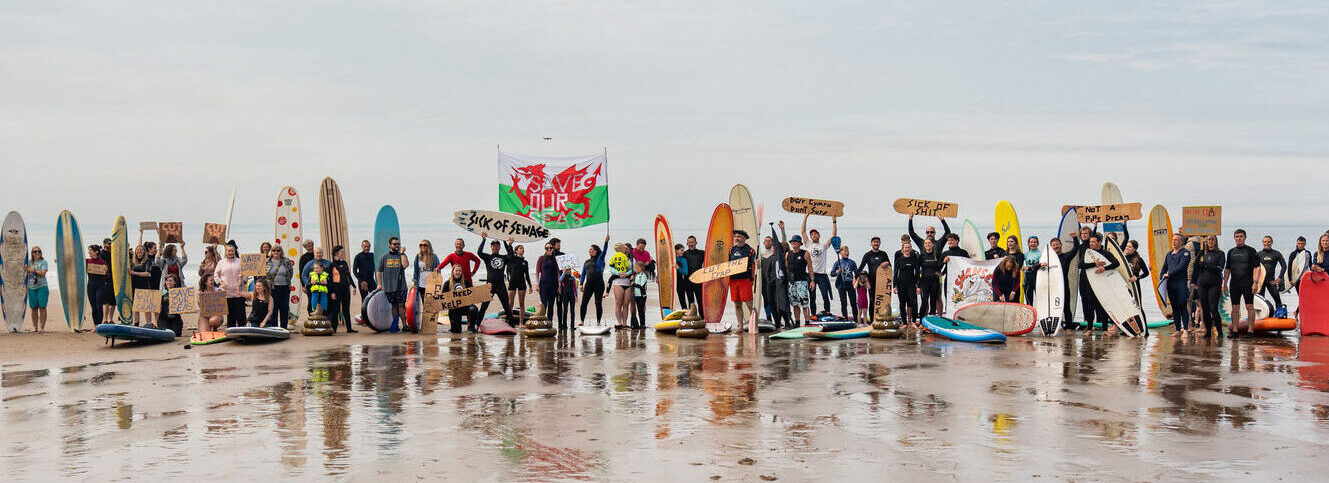
Different Systems, same Dirty Business
By now, even if you haven’t seen Dirty Business, you’ve probably heard about it. If you really have been out of the loop, I’m referring to Channel 4’s three-part docu-drama on the sewage scandal in England. It focuses on England’s failed privatised water industry, a decade-long investigation by the amazing people at WASP, and the tragic death of eight-year-old Heather Preen after contracting E. Coli whilst on holiday to Devon in 1999.
The story focuses on England, its water company structure, as is completely logical for an English. But the lessons and questions it raises reach far beyond England’s borders.
As the UK Government prepares a Water Bill, the Welsh Government proposes its own Clean Water Bill, and Northern Ireland Executive look forward to a Fisheries and Water Bill, the lessons of Dirty Business reach far beyond England. Understanding what’s gone wrong across the whole of the UK – so we can put it right – has never been more important.
Learn more about Dirty Business

Wales: not-for-profit, but apparently for pollution
Welsh water companies (Dŵr Cymru Welsh Water and Hafren Dyfrdwy) are not-for-profit — no shareholders extracting dividends, no profit motive driving decisions. It sounds better… but water companies in Wales released sewage into rivers, lakes and seas for nearly a million hours in 2024.1
Behind the not-for-profit label are some uncomfortable realities. Wales have the second highest water bills in the UK, yet 41% of Dŵr Cyrmu Welsh Water’s revenue – including customer bills – are being used to pay back debt, not to protect public health.2 The system might be without shareholders, but that hasn’t stopped Welsh Water from trying to reward its executive bosses despite staggering pollution levels. Welsh Water tried to use customer funds to pay its executive bonuses in 2024. Ofwat had to intervene to stop it.3
So who’s keeping Welsh Water in check? In theory, Natural Resources Wales (NRW). NRW recorded a “further decline” in Welsh Water’s environmental performance in 2024, alongside a rise in serious pollution incidents.4 Then, they announced plans to cut 265 jobs – a move that trade union members told the BBC could leave the regulator without “enough staff on the ground” to protect the environment”.5 Sure enough, in March 2025, NRW announced they were going to “cut back” on investigations.6
The consequences were predictable. Reductions in pollution investigations – combined with years of underinvestment led a Senedd committee to conclude that NRW does not have the funding it needs to hold polluters to account.7
Since then, NRW say they saw the highest number of pollution incidents in a decade.8 This month, Welsh Water have been fined £44.7m for “serious and unacceptable breaches” in its sewage and network services. Meanwhile, Dŵr Cymru customer bills are due to increase again next month, with rises of 42% by 2029-30.9
This is another catastrophic failure of the system, and of the regulators designed to oversee it. Not-for-profit, it turns out, is not enough on its own.

Scotland: routine sewage pollution, exceptional excuses
The regulator for Scotland is Scottish Government and Scottish Environment Protection Agency (SEPA). They regulate Scottish Water, which is publicly owned, and has lower bills than England and Wales. Unfortunately, that’s where the good news ends.10
Current legislation, The Urban Wastewater Treatment (Scotland) Regulations 1994, makes clear that discharges from storm overflows are only permitted in exceptional circumstances. But this is not what is happening. Environmental Standards Scotland, the Scottish environmental watchdog, has found that SEPA have consistently failed to uphold these regulations. This isn’t a grey area. The law exists. It’s just not being followed. Scottish Water is not released sewage in exceptional circumstances, it’s routine.11
And we may not even know the full extent of it. There are more than 3600 combined sewage overflows in Scotland. In 2024, there were over 23,000 reported sewage spills from Combined Sewage Overflows (CSOs),12 but just 6.7% of CSOs were actively monitored that year. The real figure could have been over 300,000 spills.13 SEPA have now increased monitoring to over 30% as of February 2026, but there’s a long way to go for full transparency. Nearly two thirds of Scotland’s sewage overflow network remains in the dark.
The Scottish Environmental Protection Agency (SEPA) say that their role is to “make sure that the environment and human health is protected,” but how can they do that if they don’t even know the true picture?
To make things worse, SEPA has seen real terms budget cuts of 26% since 2010.14 The number of legal prosecutions being taken against polluters has dropped and the number of water quality samples being taken has fallen by 65% from 2019 to 2024.15 The capacity of regulator is shrinking when we need the opposite.
The human cost is already visible. 46 of the country’s 89 designated bathing waters – where hundreds of people swim daily – had at least one sample where E. Coli or Intestinal Enterococci reached unsafe levels.16 Perhaps most alarmingly, nearly three quarters of the unsafe samples across the country came from beaches rated “good” or “excellent”.17 People are swimming in sewage-contaminated water and being told it’s fine.
Without transparency around sewage overflows and a well-funded regulated, we’re surfing, swimming and paddling in the dark. And in the dark, every dip is a gamble with our health.
Northern Ireland: under-monitored, underfunded, unacceptable
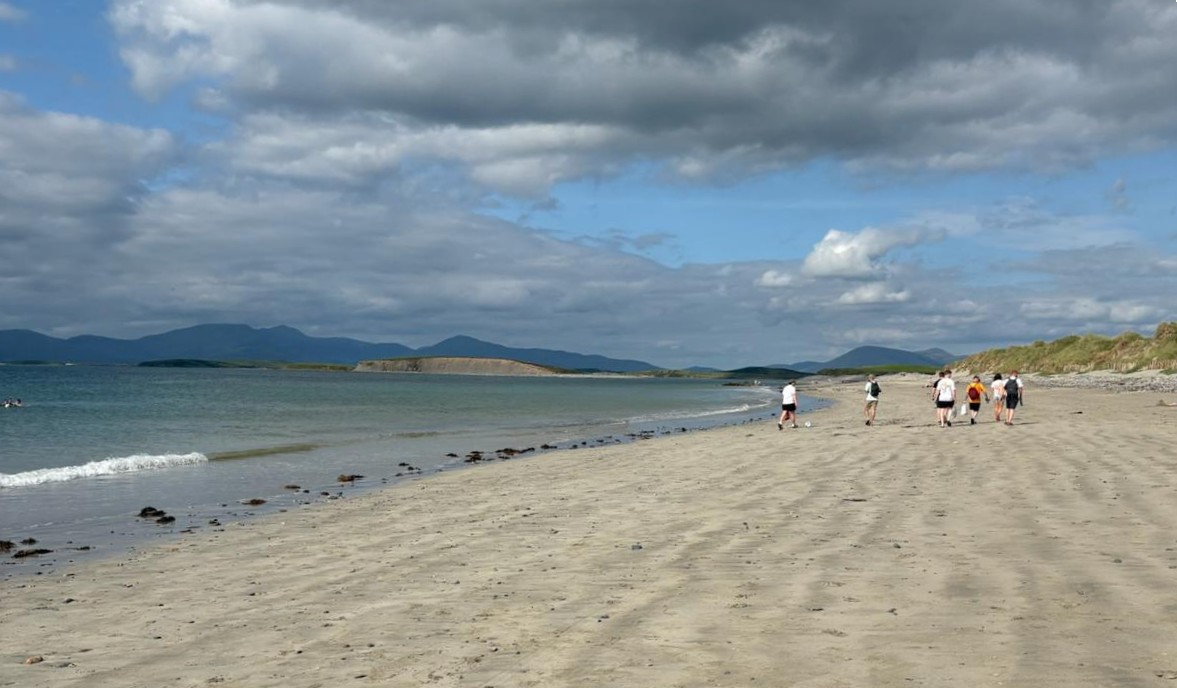
Northern Ireland Water is publicly owned, and customers don’t receive a separate water bill – water is bundled into an overall domestic rate alongside education and transport. It is regulated by the Northern Ireland Environment agency (NIEA), an Executive Agency within the Department of Agriculture, Environment and Rural Affairs (DAERA). Different structures, again, but in practice, the story is familiar.
More than 20 million tonnes of untreated sewage and wastewater spill into waterways each year, and just 29% of Northern Ireland’s surface waterbodies achieved good ecological status in 2024.18 That year, Northern Ireland Water recorded 2,967 discharges, but here‘s the catch, that number represents just 4.3% of their overflows. The other 95% were completely unmonitored.19 The real scale of pollution across Northern Ireland has been hidden from us, but what we do know doesn‘t paint a positive picture.
Take Belfast Lough – in 2024, NI Water spilled sewage for 3,967 hours into the lough. Back in 2015, the Government recognised the plight of Belfast Lough, and devised the Living with Water Programme, which involved eight major sewage projects designed to clean up the lough. A decade later, in 2025, the project was delayed due to lack of funding. Delayed “indefinitely”.20 Years of Stormont collapse have meant no long-term budgets, no ministerial oversight and no ability to approve major infrastructure projects.
The Belfast Lough situation is so serious that the UK Office for Environmental Protection is now investigating whether the Department for Infrastructure, DAERA and the Utility Regulator “failed to comply with environmental law” regarding raw sewage discharges into Belfast Lough and its surrounding rivers.21 The water company, the department, and the regulator could all be found legally responsible for this ongoing pollution crisis.
And even where the OEP found the regulatory approach to be broadly sound — it simply isn’t being implemented.22 This matters enormously. The OEP has identified agriculture and sewage as the two biggest drivers of nature loss in Northern Ireland.23 The consequences of the sewage scandal are already playing out – raw sewage pours into Belfast Lough virtually every time it rains”,24 the lough’s historic shellfish industry is collapsing in ”real time,”25 and house-building is being blocked due to sewage system capacity.26 In fact, over 100 development areas have been blocked or restricted due to lack of sewage capacity. Councils have warned that housing targets are now impossible to meet. This scandal is affecting social and economic development, not just the environment.27
It wouldn’t be the first time that the OEP has found DAERA and NEIA to be failing on implementation. In 2024, the OEP found that Northern Ireland’s River Basin Management Plan — due in December 2021 — had still not been finalised, and that water quality regulations were not being implemented or delivering as they should.28 The year prior, the NIEA charged Northern Ireland Water a grand total of £250 for a 2021 sewage spill. Yes, just £250 for the discharge of raw sewage.29
Stormont’s 2026-2030 Draft Budget for NI includes a 5% increase in water infrastructure funding is a measly increase and “falls far short” of being a solution.30 Lack of transparency, chronic underfunding, and weak enforcement have left people and the environment completely exposed.
Different Systems, Same Dirty Business
The geography is different, their water structures are different, even customer bills look different. But the story is the same – decades of underfunding, infrastructure left to crumble, and regulators lacking the resources and funding needed to hold anyone to account. Across the UK, different sewage scandals have a lot in common.
Let’s be clear — this didn’t happen by accident. Failing to act is not inaction. Failing to act is a choice. Every delayed project, every cut to a regulator’s budget, every paltry fine for dumping raw sewage is a choice to extend the sewage scandal.
Governments in the UK, Wales and Northern Ireland are all working on or proposing water bills that can improve water quality in 2026. New bills, new promises being made, and new targets. We’ve heard it before. We’ll be watching, we’ll be waiting, and we’ll be loud until polluters truly pay, and the sewage scandal ends across the whole of the UK.
References
- BBC, 2025. https://www.bbc.co.uk/news/articles/c24qze5pmqro
- Hall & Gray, 2025. Leaking money: the finance costs of privatised water and regulation in England and Wales: Scottish public ownership shows potential savings. https://gala.gre.ac.uk/id/eprint/50096/7/50096%20HALL_Leaking_Money_The_Finance_Costs_Of_Privatised_Water_And_Regulation_In_England_And_Wales_%28WORKING%20PAPER%29_2025.pdf
- Ofwat, 2024. https://www.ofwat.gov.uk/73-of-bonus-payments-will-not-be-paid-for-by-customers-says-ofwat/
- NRW, 2024. https://naturalresourceswales.gov.uk/about-us/news-and-blogs/news/further-decline-in-dwr-cymru-performance-outlined-in-nrw-annual-review/?lang=en
- BBC, 2024. https://www.bbc.co.uk/news/articles/ckgvl48jvpqo
- Senedd Cymru, 2025. https://record.senedd.wales/Committee/14850
- Senedd Cymru, 2025. https://senedd.wales/senedd-now/news/grave-concern-at-natural-resources-wales-plan-to-reduce-responses-to-pollution-incidents/
- NRW, 2025. https://naturalresourceswales.gov.uk/about-us/news-and-blogs/news/nrw-strengthens-regulation-of-water-companies-as-annual-performance-reports-published/?lang=en
- The Guardian, 2026. https://www.theguardian.com/business/2026/mar/12/dwr-cymru-welsh-water-apologises-ofwat-enforcement-plan-regulator
- Common Wealth, 2025. https://www.common-wealth.org/interactive/who-owns-britain/data-dashboard/tabs/water
- Environmental Standards Scotland, 2024. https://environmentalstandards.scot/our-work/our-analytical-work/storm-overflows-an-assessment-of-spills-their-impact-on-the-water-environment-and-the-effectiveness-of-legislation-and-policy/
- SEPA, 2024. https://www.scottishwater.co.uk/your-home/your-waste-water/overflows/overflow-event-data
- Surfers Against Sewage, 2025. https://www.sas.org.uk/wp-content/uploads/2025/04/SAS-WQR25-V6-Digital.pdf
- Paul Dobson, 2023. https://www.theferret.scot/scottish-government-funding-sepa-slashed/
- Paul Dobson, 2024. https://www.theferret.scot/environmental-prosecutions-plummet-sepa/
- SEPA, 2025. https://bathingwaters.sepa.org.uk/locations-and-results/?ref=theferret.scot
- Paul Dobson, 2025. https://www.theferret.scot/scottish-beaches-excellent-polluted-sewage/
- DAERA, 2026. https://www.daera-ni.gov.uk/news/daera-minister-announces-plans-strengthen-regulation-water-pollution
- NI Water, 2025. https://www.niwater.com/about-your-water/storm-overflows/storm-event-duration-monitors
- BBC News, 2025. https://www.bbc.co.uk/news/articles/c15qqlv79gqo
- OEP, 2025. https://www.theoep.org.uk/news/oep-investigates-dfi-daera-and-utility-regulator-over-belfast-lough-sewage-discharges
- OEP, 2024. https://www.theoep.org.uk/report/implementation-water-framework-directive-northern-ireland
- OEP, 2025. https://www.theoep.org.uk/report/drivers-and-pressures-northern-ireland
- BelfastLive, 2024. https://www.belfastlive.co.uk/news/northern-ireland/story-belfast-lough-sewage-pollution-30179481 and DfI et al. 2024. https://www.niwater.com/media/4sfpkemo/storyofbelfastloughv13221024.pdf
- Limerick Live, 2025. https://www.limerickleader.ie/news/northern-ireland/1745753/belfast-lough-on-knife-edge-after-pause-to-wastewater-upgrade-investment-plan.html
- Inside Housing, 2026. https://www.insidehousing.co.uk/news/northern-ireland-house-builders-warn-sewage-capacity-is-holding-back-15000-homes-96052
- Irish News, 2024. https://www.irishnews.com/news/northern-ireland/housing-developments-unable-to-be-approved-due-to-poor-water-infrastructure-critical-report-finds-G2JAF7XSKRABTDFAWEM5IOHV54/
- EOP, 2024. https://www.theoep.org.uk/report/implementation-water-framework-directive-northern-ireland
- ENDS Report, 2024. https://www.endsreport.com/article/1869190/northern-ireland-water-pay-250-water-pollution-offence?utm_source=chatgpt.com
- Northern Ireland Chamber of Commerce and Industry, 2026. https://www.northernirelandchamber.com/ni-chamber-news/draft-budget-confirms-need-for-a-1-25-per-week-solution-to-wastewater-crisis/