Special Administration – What could this mean for the water industry?
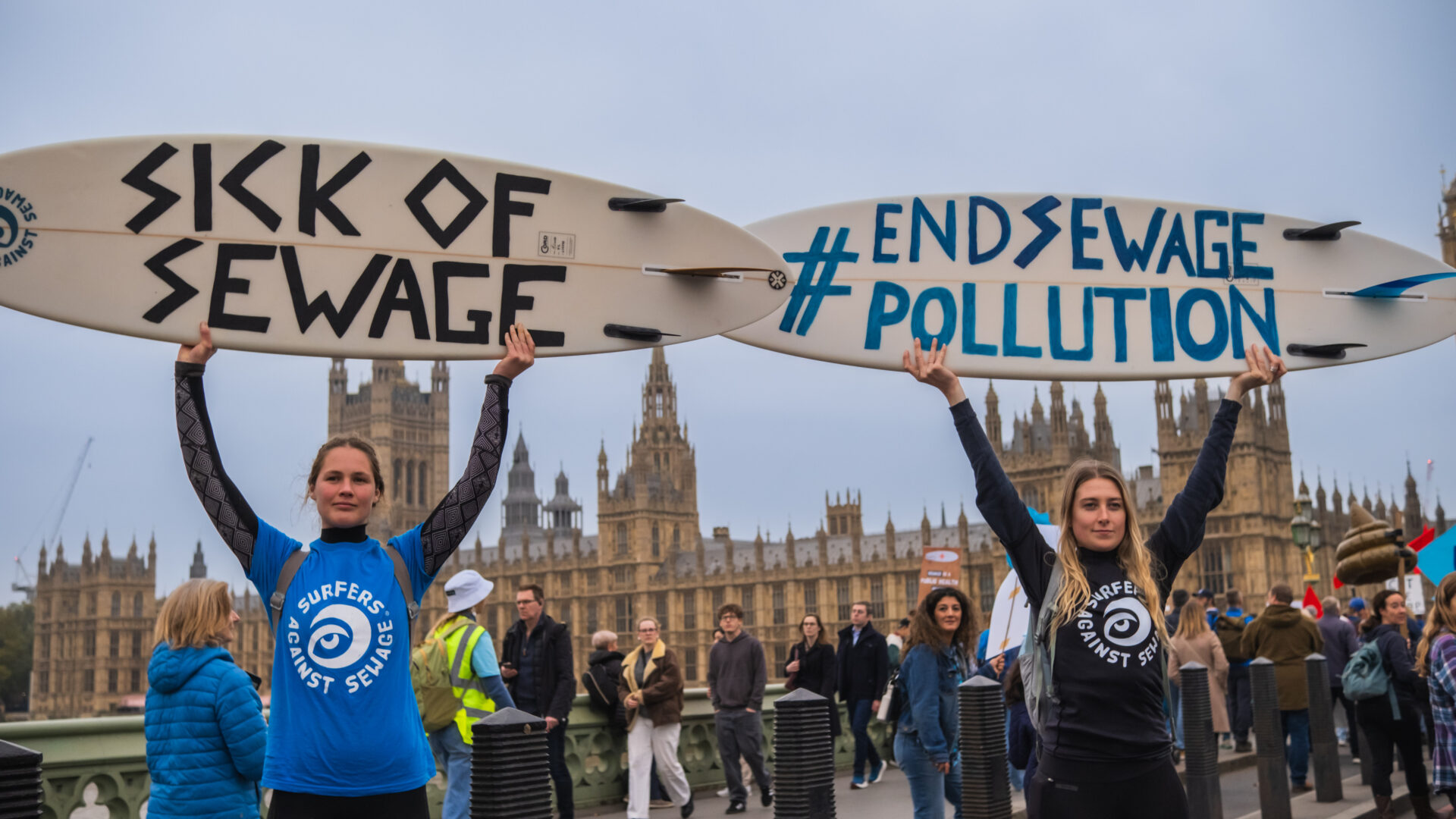
The Special Administration Regime or SAR is a term that SAS and other environmental organisations have been talking about quite a bit recently when it comes to dealing with the water industry, focusing in on Thames Water. And with our new Prime Minister Andy Burnham speaking very openly about using SAR as he pledges to take greater “public control” of Britain’s utilities. With the flow (excuse the pun) of headlines surrounding water companies continuing well into the summer and with Thames Water spotlighting themselves as the poster child of an incredibly broken sector, it’s becoming a reality that we may well be facing some time very soon.
SAS has continued to make a case for a broken industry that needs radical transformation. Through publications such as the 2025 Water Quality Report, data on our Safer Seas and Rivers Service and mass community mobilisations, we’ve made it clear that something big needs to happen. And the Government have acknowledged this too. We’ve seen Water Bills, Independent Commission Recommendations and legislation reviews launched since they were elected back in 2024, and these are all steps in the right direction. However, we need to see more. Tinkering around the edges will not cut it.
In this critical period of campaigning, we’ll not only be highlighting the problem, but shining a light on some of the potential solutions . We are not saying we have all the answers, (the industry is really really broken). But there are practical things that people in power, (that’s the Government, your local MPs and the regulators) should now be doing in order to take charge of this crumbling industry. They’ve talked the big talk now we must see big action if they’re really going to fix the water sector to put people and the planet first like they’ve promised us.
And, something that is very much on the cards, as it should be at this point, is a SAR.
What is the Special Administration Regime (SAR)?
The Special Administration Regime is not a particularly catchy title – we get that. But unpicking this very complex and legal process is super important as we move forward with our campaigning.
A SAR process is a way of dealing with a failing company whose main function is to provide vital public services (e.g. a water company) and is unable to repay its debt or meet its operational targets (e.g. a water company).
The SAR enables a company to be put into what’s called “Special Administration. Simply put, the Government steps in, gives the company’s control to a special administrator (basically someone qualified to deal with debt which in technical terms is called an insolvency practitioner) and a rescue plan is put in place.
What could this mean for the water industry?
In regard to the water industry, this process would be put in place to ultimately protect customers and the environment. A water company, unlike other companies, can’t just stop business. We all need drinking water and our toilets to flush. So putting a water company into the Special Administration Regime allows these essential services to continue whilst the company is being fixed. It is seen as the ultimate enforcement tool to ensure consumers are protected – so the important message here is that we don’t need to fear the SAR. If it is done well, it’s a good thing.
There are a few conditions required for a Special Administration Regime in the water industry in England and Wales:
- The company is unable or likely to be unable to pay its debts
- The company has failed or likely to fail to meet its statutory or licence obligations
- The company has asked to be put into special administration
- It is in the public’s interest for the company to be put into special administration
It might sound fairly straight forward so far, but it does get a little more complex if you dig into the detail. A SAR can sometimes be used to simply just rescue a struggling company. This would look something like bringing it under special administration and giving control to a special administrator, restructuring the company’s debts and then allowing the company to exit the process eventually as what is called a ‘going concern’ (meaning, a normal, operational profit-making business). However, where a SAR is brought in due to a failure to carry out a company’s statutory functions, this simple “rescue plan” is not an option. The company’s regulated business would in this case have to be transferred to a new owner entirely, and the old company be dissolved or liquidated. This is an interesting point relating to water companies like Thames Water who are billions of pounds in debt AND are failing their statutory duties.
How does this relate to our campaigning at SAS?
At SAS we want Special Administration to be used as a tool to deliver systemic reform of water companies and enable transition to a not-for-profit, mutual or public-benefit model. The privitised water industry needs to end and we need an industry that puts public health and the environment first. But where to start?
If you take a look at the criteria required for a SAR, all water companies give us quite a convincing case for SAR to be put into action. Reports from regulators confirm everything we have been campaigning on over the last year or so; failures across the board, huge amounts of company debt, environmental targets being severely missed and the entire water sector crumbling no matter where you look. Recently we have even seen legal cases be brought against CEOs (although many have still managed to take a hefty pay packet despite new laws banning this. They always find a way). And the real leader of the bad bunch, the absolute poster child of the crumbling industry, is Thames Water.
Let’s be clear, the way in which every single water company is performing makes a case for SAR to be put into action, but Thames Water is head and shoulders above the rest. The company now holds over £20bn debt, lenders have demanded leniency on meeting key environmental performance targets for as long as 15 years and they received the lowest rating possible (1*) in the this year’s environmental performance ratings. It is clear the company has more than surpassed failure in fulfilling its statutory obligations and is on its knees when it comes to debt. SAR is the necessary first-step needed to protect the millions of people across London and the Thames Valley who rely on Thames Water for drinking water and that all important toilet flush whilst a rescue plan is put in place for the company.
Time and time again, throughout last year’s general election and ever since, the government has told us that it is committed to transforming the water industry and cleaning up the UK’s seas, lakes and rivers. So, what our new PM and his Gov choose to do with Thames Water is the ultimate test as to whether they really mean business, or if they’re all bark and no bite. Using a SAR to fundamentally restructure Thames Water could act as a blueprint for change throughout the rest of the private water industry. This encompasses everything we campaign on and why it’s so important to keep talking about the possibilities of SAR. This is the change needed – real action to #Endsewagepollution. Ministers have all the powers they need. They have all the rationale they need. All that is left is for them to act and kick off the chain reaction that ends profit from pollution for good.
SAS is building the movement to completely rewire the way the water industry operates – changing it to work for people and planet, not profit. If you want to find out more about getting involved, sign up for our newsletter below!