SAS vs the government
Surfers Against Sewage vs the government
Last week, SAS launched a Judicial Review against the government’s recent changes to the Bathing Water Regulations. We believe they’ve legally overstepped and are endangering water users across the UK by prioritising profit over our health.
Below, we dive into the legal proceedings – what our challenge is, why it matters and what’s at stake. If you’re interested in how we reached this point, here’s a blog we wrote explaining the recent reform of the Bathing Water Regulations:
What is the “feasibility assessment”?
Under the Bathing Water (Amendment) (England and Wales) Regulations 2025, any new bathing water must now pass a feasibility test. This assessment checks how difficult or expensive it would be for a site to reach at least a “sufficient” bathing water quality classification. If it fails, that river, lake, or beach will not be designated as a bathing water.
And if they’re not designated, environmental regulators aren’t monitoring the water, they’re not holding polluters to account, and there’s no legal pressure for investment to make it safe to swim.
We’re yet to fully understand how this assessment will take place, but it’s likely to be desk research based on the very minimal data available for waterways.
And why is it so unfeasible?
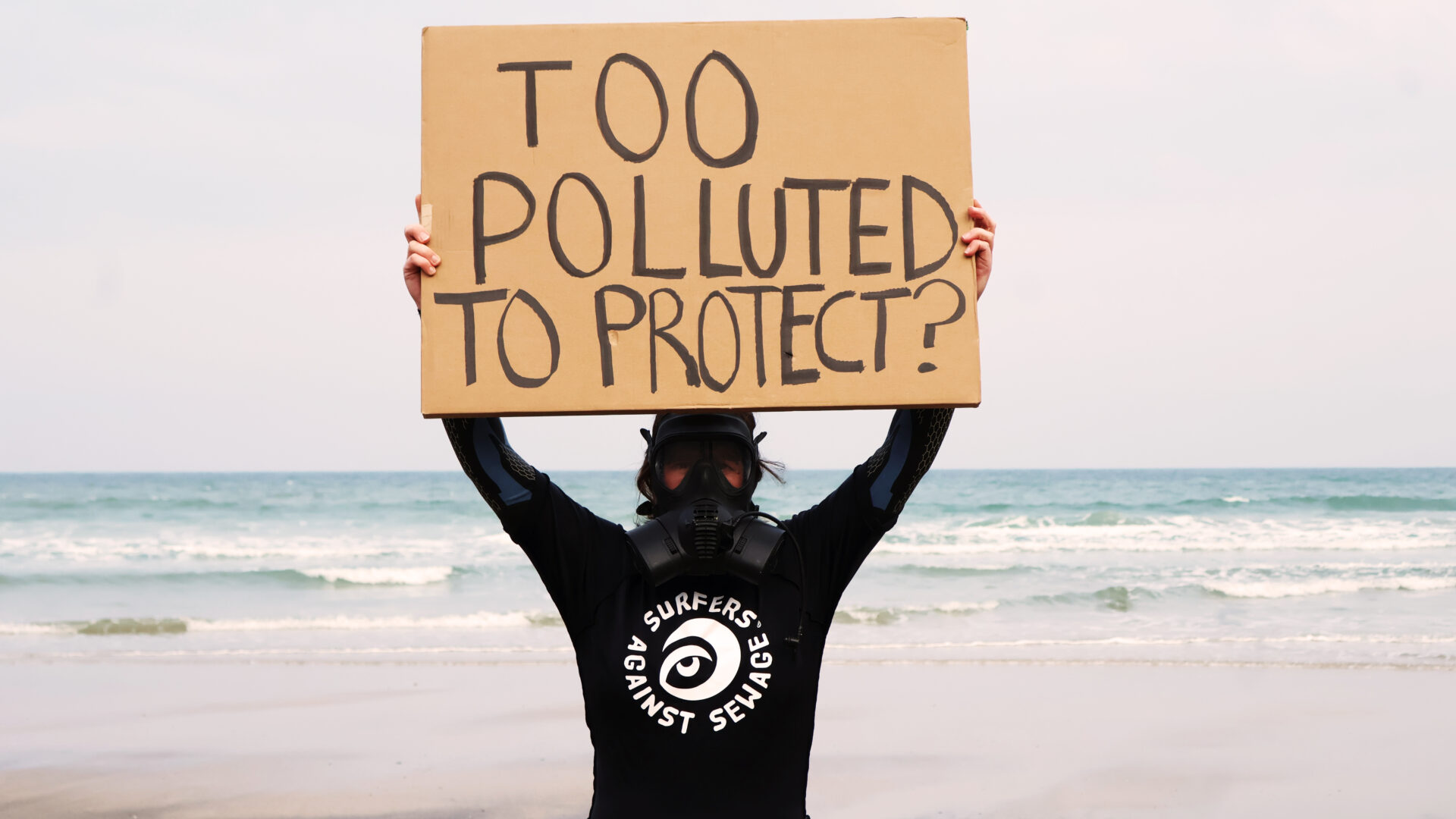
Put simply, the government is saying some rivers, lakes and beaches are too polluted to bother with. But these locations will still be swum in, just without monitoring or improvement. To apply for bathing water status, you have to prove that a large number of bathers already use the site. Often, these are beaches or rivers where swimmers have been jumping in for decades.
These changes strike at the heart of the bathing water regime. It will reduce the number of sites protected, prevent the collection of water quality data and put public health at risk. Popular spots will still be swum in, but without any oversight or improvement.
The Legal case
Firstly… what is a Judicial Review?
A Judicial Review is a legal process where a court checks whether a public body has acted lawfully when making a decision or taking an action.
It’s not about whether the decision was “right” or “wrong”, but about whether the decision was made properly and within the law.
Our challenge
We’ve joined forces with environmental lawyers at Leigh Day because we believe the government is overstepping its powers with these changes. EU law – which was retained in UK legislation after Brexit – requires that any water used for leisure must be designated and improved. The new feasibility assessment flips this on its head. It lets cost and difficulty decide whether a site is protected, rather than the potential risk to people.
There are two grounds on which we’re challenging these changes:
Ground 1: These reforms contradict the EU Bathing Water Directive – and as such, this change demands a full Act of Parliament
Our first challenge is based on the fact that these reforms would contradict the law set out in the Bathing Water Directive. The feasibility assessment of Core Reform 2 would change how bathing waters are designated. Under the EU Bathing Water Directive, which was retained in UK law, any surface water can be considered a potential bathing site and the government must then work to improve water quality. Current water quality or the cost of improvements aren’t supposed to influence that decision.
The reforms flip this approach. Cost and practicality would become determining factors. This is a major change to the legal framework inherited from the EU. That means it should go through a full Act of Parliament. Instead, the government have made these changes through a statutory instrument – a legislative tweak that lets the government make small changes to laws without in-depth parliamentary processes. But this isn’t an administrative update, it’s a major reform that will impact the health of any wild swimmers or paddlers who want to jump into their much-loved swim spot. As such it demands proper scrutiny.
(Not to mention that altering UK environmental law by changing a major legal process with basically no oversight sets a pretty dangerous precedent).
Ground 2: Putting public health at risk
The government claims that they’re making these changes to protect public health. But we know the feasibility assessment does the opposite. Sites that fail this test will still be swum In, as they’re already proven, popular swim spots. The only difference is that swimmers won’t be able to access water quality data, so will be swimming in areas with known poor quality without any ability to assess risk of sickness from bacteria and pathogens. And to be clear, these risks could easily be avoided if these stretches of water were properly designated and improved.
Outcomes
If we win, these changes could be stopped in their tracks, and any major reforms would need full parliamentary debate and scrutiny.
If we lose, more popular waters will be left unprotected, polluted, and dangerous. All while people keep using these spaces to surf, swim, paddleboard and kayak.
Regardless, we’ll be continuing to keep pressure on polluters and those in power to protect the health of every water user.
What happens next?
We are working with Leigh Day to prepare evidence to show the practical impact of these changes, including collecting case studies from communities across the UK of swim spots that could be left undesignated or those that are already designated that would have been impacted. The Judicial Review will consider whether the government acted within its powers and whether these reforms undermine the purpose of the Bathing Water Regulations.
The legal process can take up to a year to reach a decision in court. We will continue to blog and update you via our newsletter and social media as the proceedings unfold.
Find out more about the reforms here: